

Few warning signs are as instantly recognizable as the biohazard symbol. That three pronged, circular design shows up on lab doors, medical waste bins, hazmat suits, video game logos, and even tattoos and almost everyone understands what it means without ever being taught.
In this guide, you’ll find copy paste biohazard symbols, the fascinating true story of how the icon was invented, its official meaning and color codes, how it differs from the radioactive symbol, and where it shows up in real life from laboratories to pop culture.
What Is the Biohazard Symbol?
The biohazard symbol is a standardized warning icon used to indicate the presence of biological substances that pose a serious threat to health such as viruses, bacteria, toxins, or contaminated medical waste. It’s recognized and used internationally across hospitals, laboratories, waste management, and biosafety industries.
You’ll typically see it:
- On medical waste containers and sharps bins
- Outside laboratories handling infectious materials
- On hazmat suits and protective equipment
- On shipping labels for biological samples
- In signage warning of contamination risk
Read Also This Blog: Amazing Tick Symbol
Biohazard Symbol Copy and Paste
Here’s a quick collection of biohazard related symbols and characters you can copy and paste directly:
☣ ☣️ 🧫 🧬 🦠 ⚠️ ☢ ☢️ 🧪 💉
| Symbol | Name |
| ☣ | Biohazard Sign (text) |
| ☣️ | Biohazard Sign (emoji) |
| 🦠 | Microbe |
| 🧫 | Petri Dish |
| 🧬 | DNA |
| ⚠️ | Warning Sign |
| ☢️ | Radioactive Sign |
| 🧪 | Test Tube |
Click, copy, and paste any of these into documents, signage designs, chats, or social posts.
Biohazard Symbol Meaning
At its core, the biohazard symbol signals: danger biological hazard present. It warns people to stay away from, or take precautions around, materials that could carry infectious agents or biological risk.
What makes this symbol especially clever is that it was never meant to look like anything specific. It doesn’t represent a virus, a cell, or any real biological shape. Instead, it was deliberately designed to be abstract, so it could be taught as a completely new warning free from confusion with existing symbols.
Biohazard Symbol Origin: The True Story
The biohazard symbol has a surprisingly recent and well-documented history. It wasn’t inherited from ancient warning signs. It was purpose-built in a lab, almost like a piece of branding.
In 1966, Charles Baldwin, an environmental health engineer at Dow Chemical, led the effort to create it, working alongside Robert Runkle at the National Cancer Institute. Baldwin was tasked with designing a warning symbol for hazardous biological materials that was instantly recognizable and universally understandable.
The problem at the time was that laboratories across the U.S. used inconsistent, homemade warning signs, which created real safety risks since nobody could reliably recognize what each one meant.
Dow’s design team set strict criteria for the new symbol, and artists created more than 40 candidate designs, of which six were shortlisted for public testing. The winning design, the now famous trefoil was chosen specifically because it was memorable yet meaningless, meaning it carried no prior associations that could confuse people.
Why was the symbol designed to be “meaningless”?
Because a completely new, abstract shape could be taught fresh to everyone, avoiding the risk of being confused with existing symbols that already carried different meanings.
Is the biohazard symbol inspired by anything specific?
Not intentionally some design historians have noted it loosely resembles motifs found in Japanese family crests, though this wasn’t a deliberate design reference.
Biohazard Symbol Name
Officially, the icon is called the biological hazard symbol, commonly shortened to biohazard symbol. In Unicode, its formal character name is simply “Biohazard Sign,” represented by the character ☣.
Universal and International Biohazard Symbol
The biohazard symbol is recognized as a universal hazard symbol, meaning its design and meaning stay consistent across countries, languages, and industries. This international standardization is exactly why it was created in the first place to replace a confusing mix of local, inconsistent warning labels with one design everyone could learn and trust.
It’s used under safety standards in laboratories, hospitals, and waste management systems around the world, making it one of the most globally consistent hazard icons in existence.
Biohazard Symbol Color
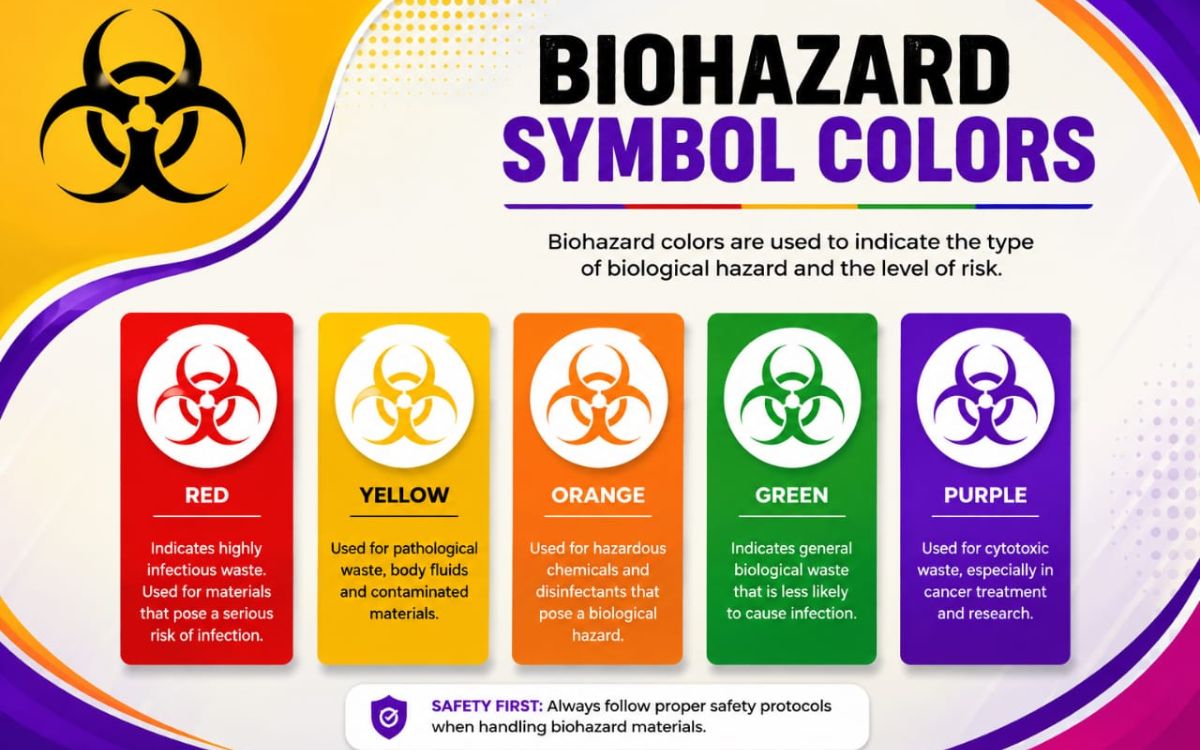
Color plays a big role in how the biohazard symbol is used in real-world settings.
| Color | Common Meaning/Use |
| Red | Most common; used for high-risk biohazard waste and general warning labels |
| Orange | Sometimes used for biohazard warning signage per specific safety codes |
| Black (on yellow/fluorescent background) | Standard high visibility hazard signage |
| Purple | Occasionally used to denote certain categories of infectious waste in specific facilities |
Why is the biohazard symbol usually red?
Red is universally associated with danger and urgency, making it the most effective color choice for grabbing attention quickly in high risk environments.
Red Biohazard Symbol
The red biohazard symbol is the most widely recognized version, typically seen on:
- Medical waste bags and sharps containers
- Hospital signage for infectious disease areas
- Biohazard warning labels on shipping boxes
Its high visibility makes it ideal for fast recognition, especially in emergency or clinical settings where quick identification matters.
Biohazard Symbol vs Radioactive Symbol
These two hazard symbols are often confused, but they warn about completely different risks.
| Feature | Biohazard Symbol | Radioactive Symbol |
| Shape | Three overlapping circles (trefoil) | Trefoil with triangular blades around a central circle |
| Represents | Biological hazards (viruses, bacteria, infectious waste) | Radiation hazards (nuclear materials, radioactive sources) |
| Common Color | Red, orange, black | Yellow and black (or magenta on some labels) |
| Typical Locations | Labs, hospitals, medical waste | Nuclear facilities, radiology departments |
While both symbols use a similar circular, segmented design language, they are unrelated in origin and meaning one deals with living biological threats, the other with radiation exposure.
Biohazard Symbol in a Laboratory
Inside laboratories, the biohazard symbol plays a functional safety role, not just a decorative one. It’s used to:
- Label refrigerators or freezers storing infectious samples
- Mark doors to rooms with biosafety level (BSL) restrictions
- Identify waste bins for contaminated materials
- Flag equipment that has been exposed to biological agents
Laboratories often pair the symbol with additional text, such as the specific biosafety level or type of biological agent, to give workers more context beyond the icon alone.
Biohazard and Toxic Symbol Differences
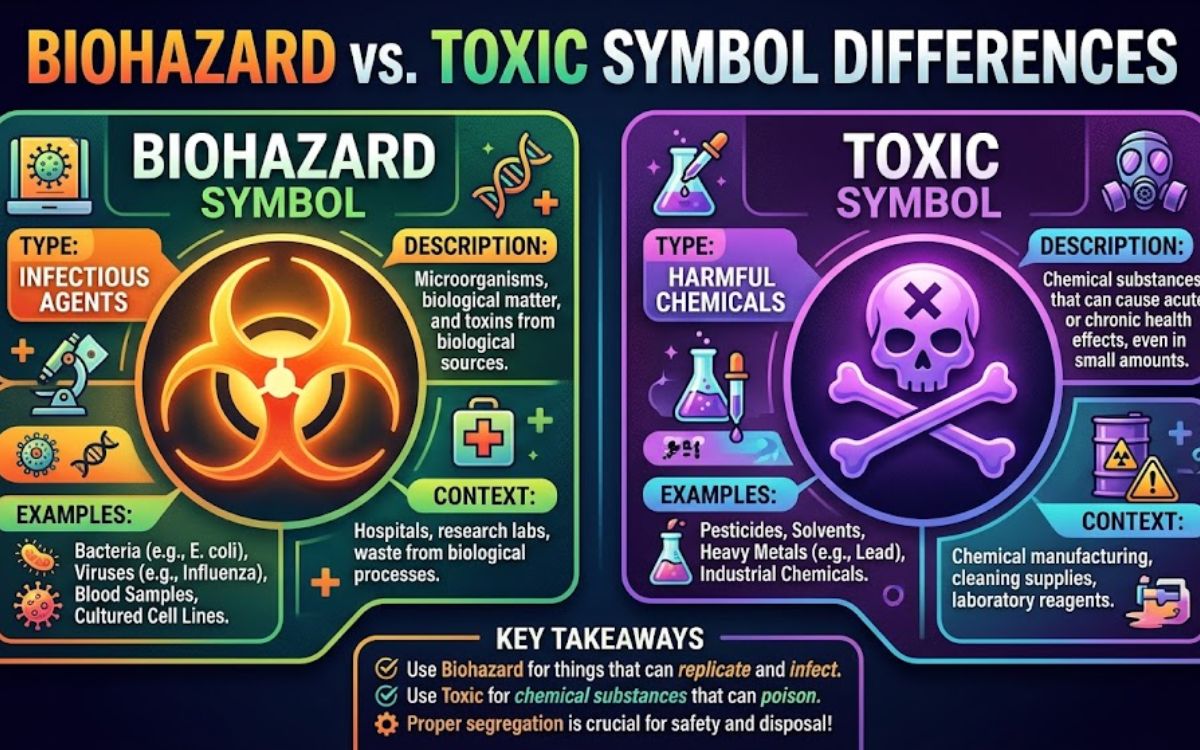
The biohazard symbol is sometimes confused with the general toxic/poison symbol, but they indicate different types of danger.
| Symbol | Meaning |
| ☣ Biohazard | Biological agents like viruses, bacteria, or infectious waste |
| ☠ Toxic/Poison | Chemical poisoning risk from ingestion, inhalation, or contact |
Both symbols may appear together on certain hazardous waste, especially in facilities that handle both biological and chemical risks.
Biohazard Waste Symbol
The biohazard waste symbol specifically marks materials that must be disposed of following strict medical or biological waste protocols. It typically appears on:
- Red waste bags for contaminated materials
- Sharps disposal containers
- Pathology and lab waste bins
- Transport containers for infectious specimens
Its purpose is purely functional to prevent accidental exposure and ensure waste is handled according to safety regulations.
Biohazard Infectious Material Symbol
When labeling infectious materials specifically, the biohazard symbol is often combined with additional wording like “Infectious Substance” or a biosafety level number (BSL-1 through BSL-4), giving handlers more precise information about the risk level involved.
Biohazard Symbol Tattoo
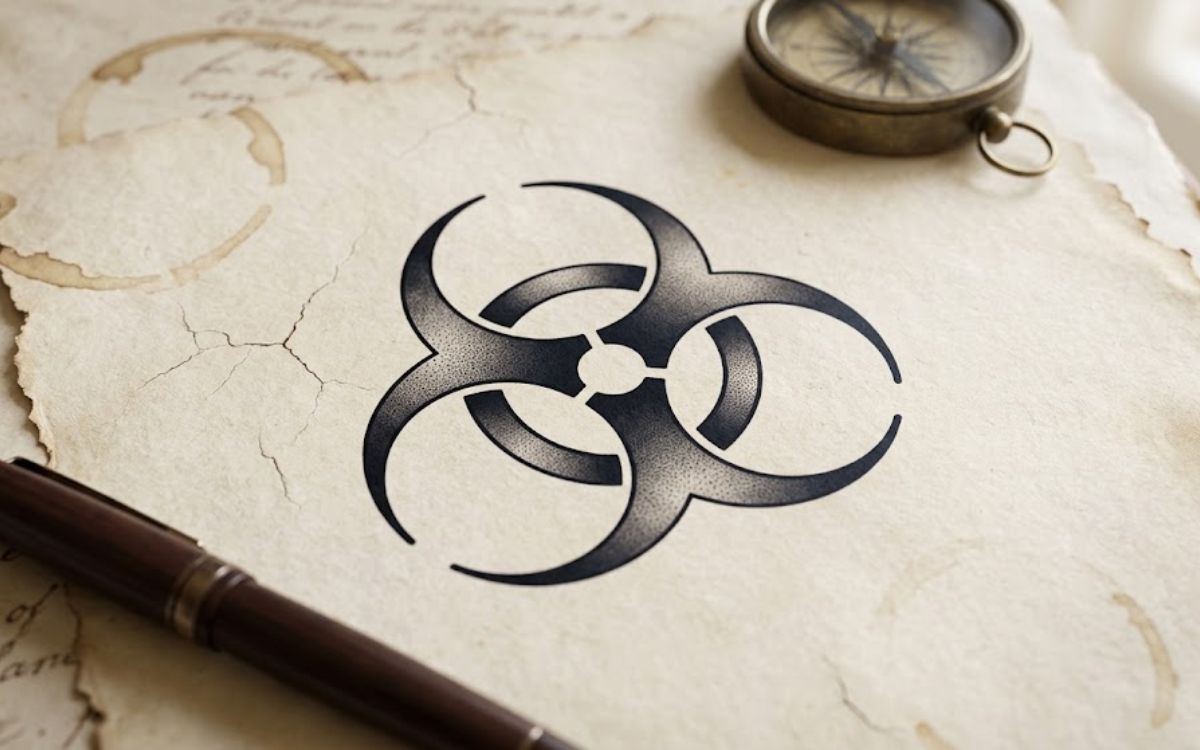
The biohazard symbol has become a popular tattoo choice, often chosen for its bold, minimal design and its association with themes like:
- Resilience or having “survived” something difficult
- An interest in science, medicine, or biosafety work
- Aesthetic appeal from horror, gaming, or post-apocalyptic culture
- A nod to Resident Evil, known in Japan as “Biohazard,” a franchise that made the symbol iconic in pop culture
Its clean geometric shape also makes it a popular choice for minimalist and blackwork tattoo styles.
Does the biohazard tattoo have an official meaning?
No outside its original safety context, the tattoo’s meaning is personal and varies from person to person, often tied to aesthetics or pop culture rather than literal biohazard warnings.
Biohazard Symbol in Tesla Vehicles
Tesla famously included a hidden feature called “Biohazard Defense Mode” in select Model S and Model X vehicles. When activated, the car’s touchscreen displays a large biohazard symbol while the HVAC system switches to maximum air filtration, designed to protect occupants from airborne contaminants. It’s a fun example of the symbol crossing over from pure safety signage into consumer technology and pop-culture easter eggs.
How to Draw the Biohazard Symbol
Want to sketch the biohazard symbol by hand? Here’s a simple step by step approach:
- Draw a small circle in the center of your page, this is the core.
- From the center, sketch three identical crescent-like blades curving outward, spaced evenly at 120 degrees apart (like a threebladed pinwheel).
- Around each blade, draw a larger circle so it partially overlaps with the two neighboring circles, creating the classic trefoil look.
- Clean up the outlines so the three circles and center blades connect smoothly.
- Fill or outline the design in black, red, or your color of choice.
Practicing with a compass or circle template can help keep the proportions symmetrical.
Quick Reference Table: Biohazard Symbol Facts
| Detail | Information |
| Created | 1966 |
| Creators | Charles Baldwin (Dow Chemical), Robert Runkle (NCI) |
| Official Name | Biological Hazard Symbol |
| Unicode Character | ☣ |
| Common Colors | Red, orange, black |
| Common Uses | Labs, hospitals, medical waste, hazmat suits |
Conclusion
The biohazard symbol is proof that great design doesn’t need a literal meaning to be effective.It just needs to be memorable. From its deliberate “meaningless” origin in a 1960s Dow Chemical lab to its presence today on hospital doors, tattoos, and even Tesla dashboards, this trefoil icon has become one of the most universally understood warning signs on the planet. Whether you need it for a safety label, a design project, or just to copy and paste into a caption, you now have everything you need in one place.
FAQs
What does the biohazard symbol mean?
It warns of the presence of biological materials that pose a health risk, such as infectious agents or contaminated waste.
Who invented the biohazard symbol?
Charles Baldwin of Dow Chemical and Robert Runkle of the National Cancer Institute created it together in 1966.
What color is the biohazard symbol usually?
It’s most commonly shown in red, though orange and black versions are also used depending on the safety standard.
Is the biohazard symbol the same as the radioactive symbol?
No, they look somewhat similar but represent different hazards biological risk versus radiation risk.
Can I copy and paste the biohazard symbol?
Yes, simply copy the ☣ or ☣️ symbol from this page and paste it anywhere you need it.
Why do people get biohazard symbol tattoos?
Mostly for its bold, minimal design and pop-culture associations, rather than any literal biohazard meaning.
What does the biohazard symbol look like?
It’s a trefoil shape made of three overlapping circles with curved blades radiating from a central point.
