

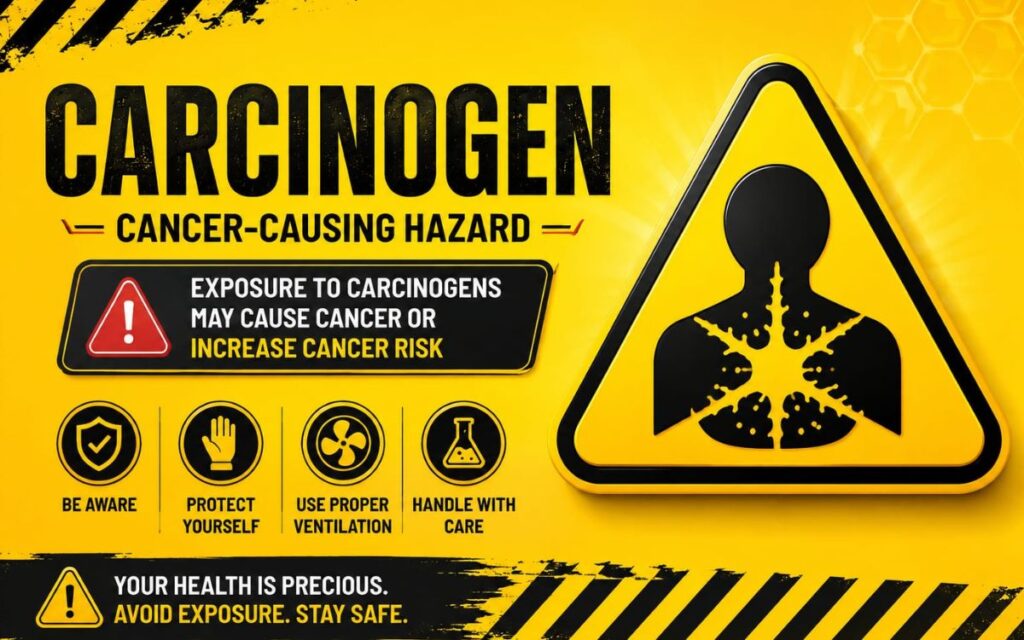
Carcinogen Symbols are incredible. If you’ve ever looked at a chemical label and seen a black silhouette with a burst on its chest inside a red diamond, you’ve already met the carcinogen symbol. This single pictogram is one of the most important warnings in workplace safety, used on everything from lab reagents to industrial solvents.
This guide breaks down exactly what the carcinogen symbol means, how it differs across GHS, OSHA, and WHMIS systems, where you’ll see it combined with other hazard icons, and how to copy and paste related warning symbols for documents, labels, or digital use.
What Is the Carcinogen Symbol?
The carcinogen symbols officially called the Health Hazard pictogram under the Globally Harmonized System (GHS) is a black silhouette of a human torso with a white, star shaped burst spreading across the chest, set inside a red diamond border on a white background.
Carciogen symbols don’t only mean “carcinogen.” It’s a shared icon covering several serious, often long-term health hazards:
- Carcinogenicity: May cause cancer.
- Mutagenicity: May cause genetic mutations.
- Reproductive toxicity: May harm fertility or an unborn child.
- Respiratory sensitization: May trigger asthma or breathing difficulty.
- Target organ toxicity : May damage specific organs over time.
- Aspiration hazard: May cause lung damage if swallowed or inhaled.
In short, the symbol is a quick visual signal that a substance can cause internal, delayed, or chronic harm, rather than immediate injury.
Read Also This Blog: Beautiful Bird Symbols
Carcinogen Symbols Copy and Paste
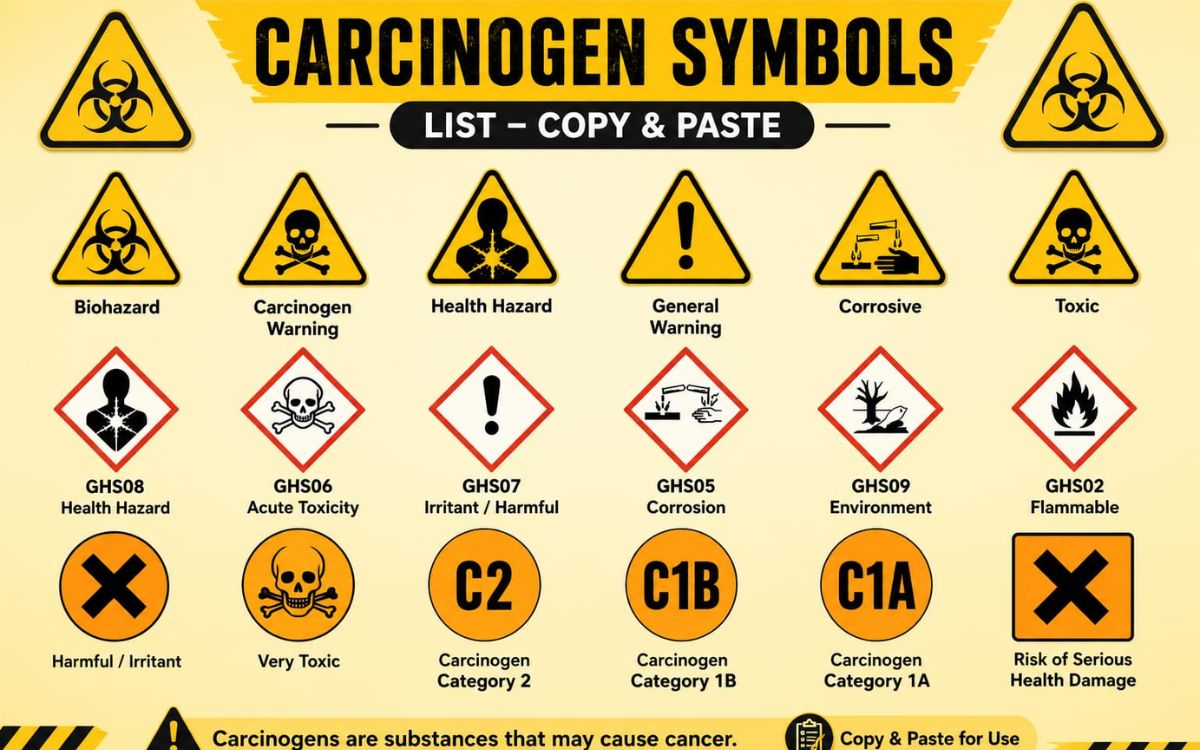
While the official GHS pictogram is a graphic (not a standard keyboard character), several related hazard symbols are available as Unicode text characters you can copy and paste into documents, spreadsheets, or messages.
| Carcinogen Symbols | Name | Common Use |
|---|---|---|
| ☣ | Biohazard | Biological hazard warning |
| ☢ | Radioactive | Radiation hazard |
| ⚠️ | Warning Sign | General hazard alert |
| ☠️ | Skull and Crossbones | Acute toxicity / poison |
| 🧪 | Test Tube | Chemical/lab reference |
| ⚗️ | Alembic | Chemistry, distillation |
| 🔥 | Flame | Flammable hazard |
| ♻️ | Recycling | Environmental hazard reference |
Note: For official labeling, workplaces must use the exact GHS pictogram graphic (PNG/vector) supplied by OSHA or your local regulatory body not a Unicode character since compliance requires the standardized red-bordered diamond image.
Carcinogen Symbol in Chemistry
In chemistry and laboratory settings, the carcinogen symbol appears on Safety Data Sheets (SDS) and container labels to flag substances that have been tested or classified as cancer causing. Common carcinogenic chemicals that carry this symbol include:
- Benzene
- Formaldehyde
- Asbestos fibers
- Certain chromium compounds
- Silica dust (crystalline)
- Cadmium compounds
Chemists and lab technicians are trained to recognize this pictogram instantly, since it changes how a substance must be stored, handled, and disposed of.
Carcinogen Symbol vs. Related Hazard Symbols
| Hazard Symbol | Pictogram Design | What It Warns About |
|---|---|---|
| Health Hazard (Carcinogen) | Silhouette with chest burst | Cancer, mutation, organ damage, reproductive harm |
| Acute Toxicity | Skull and crossbones | Fatal or toxic if swallowed, inhaled, or absorbed |
| Corrosive | Liquid pouring onto hand/surface | Skin burns, eye damage, corrodes metal |
| Explosive | Exploding bomb | Risk of explosion or detonation |
| Flammable | Flame | Catches fire easily |
| Irritant | Exclamation mark | Minor skin, eye, or respiratory irritation |
Carcinogen Symbols and Acute Toxicity Symbols
When a chemical is both carcinogenic and acutely toxic, its label will display two separate pictograms. The Health Hazard symbol and the Skull and Crossbones symbol side by side. This tells handlers the substance poses both an immediate poisoning risk and a long term cancer risk, requiring extra precautions like respiratory protection and strict exposure limits.
Carcinogen and Corrosive Symbols
Some industrial chemicals, such as certain chromic acid solutions, are classified as both carcinogenic symbols and corrosive also. In these cases, labels combine the Health Hazard pictogram with the Corrosion pictogram (a test tube pouring liquid onto a hand and a surface). This combination warns that the chemical can burn skin on contact while also posing a cancer risk with repeated exposure.
Carcinogen and Explosive Symbols
Though less common, a small number of substances are classified as carcinogenic and explosive simultaneously often found in specialty industrial or military grade chemicals. Labels for these products display the Health Hazard symbol alongside the Exploding Bomb pictogram, signaling that the material must be handled with both chemical exposure controls and physical detonation precautions.
Health Hazard Carcinogen Symbols Explained
The “Health Hazard” pictogram is the formal, GHS approved name for what most people call the carcinogen symbol. Carcinogen symbols are introduced to replace older, inconsistent national symbols with a single global design so that:
- Workers across different countries can recognize the same hazard instantly
- Shipping and import/export labeling stays consistent
- Safety Data Sheets align with the physical label on the container
Carcinogen Symbols Under WHMIS (Canada)
Canada’s Workplace Hazardous Materials Information System (WHMIS 2015) adopted the GHS pictogram system, meaning the carcinogen symbol used in Canadian workplaces is identical in design to the one used under OSHA in the United States. Under WHMIS, this pictogram falls into the “Health Hazards” classification group and is required on both the physical label and the corresponding Safety Data Sheet (SDS).
Carcinogen Symbol Under GHS
The Globally Harmonized System of Classification and Labelling of Chemicals (GHS), developed by the United Nations, standardizes hazard symbols across the world. Under GHS:
- The carcinogen/health hazard symbol is officially labeled GHS08.
- It appears with a signal word either “Danger” or “Warning” depending on severity.
- It must be paired with a hazard statement, such as “May cause cancer” or “Suspected of causing cancer”.
Carcinogen Symbols Under OSHA
In the United States, the Occupational Safety and Health Administration (OSHA) enforces GHS aligned labeling through its Hazard Communication Standard (HCS 2012). OSHA requires:
- The Health Hazard pictogram on any product classified as a carcinogen
- Employee training so workers can identify and understand the symbol
- Access to the Safety Data Sheet for every hazardous chemical in the workplace
Failure to properly label carcinogenic substances under OSHA regulations can result in significant workplace safety violations and fines.
Carcinogen Symbols in Labs
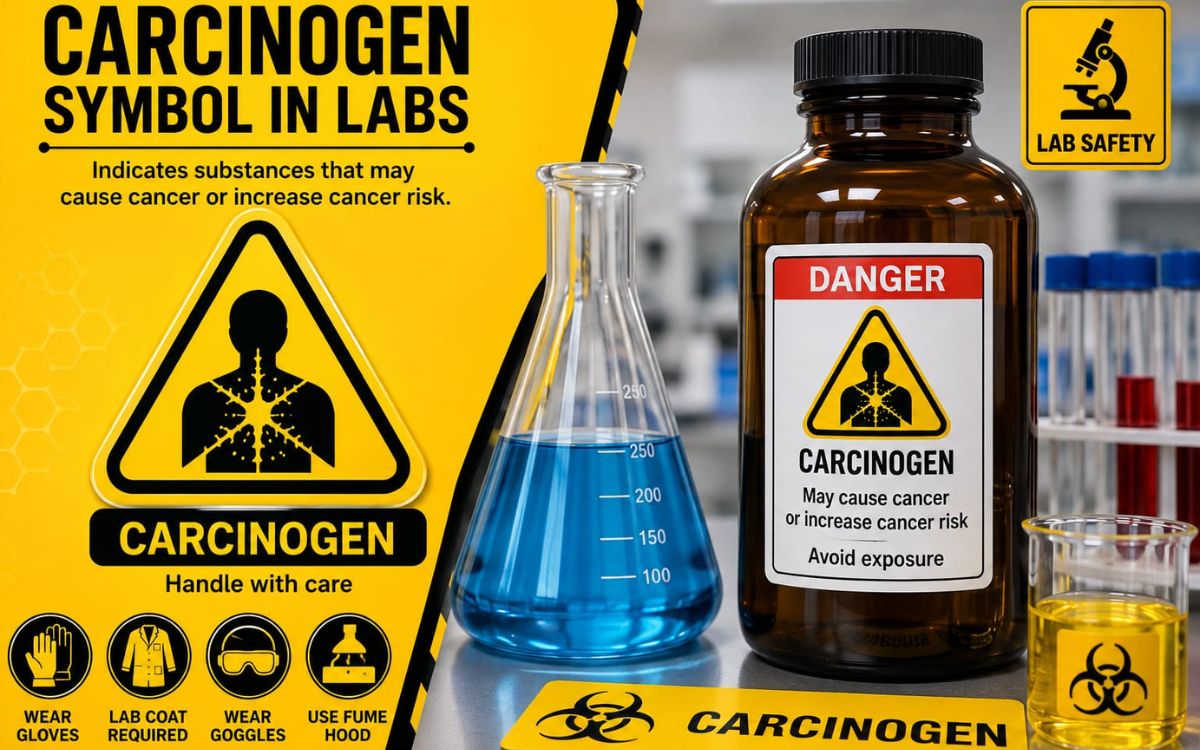
Laboratories are one of the most common places to encounter the carcinogen symbol, since many reagents and solvents used in research carry this classification. Standard lab practices around carcinogen labeled chemicals include:
- Storing them in designated, ventilated cabinets
- Using fume hoods during handling
- Wearing appropriate personal protective equipment (PPE)
- Logging usage in a controlled substance or hazardous chemical inventory
- Disposing of waste through certified hazardous waste channels
Quick Lab Safety Checklist
- Read the SDS before first use
- Confirm PPE requirements (gloves, goggles, respirator if needed)
- Work in a fume hood or ventilated area
- Label secondary containers correctly
- Dispose of waste per institutional hazardous waste policy
Where to Find Carcinogen Symbols PNG Files?
For training materials, safety posters, or compliant labeling, it’s best to source the official GHS08 pictogram PNG or vector file from a verified regulatory or safety supply source rather than a generic image search. Reliable sources include:
- OSHA’s official pictogram resource pages
- National WHMIS/GHS regulatory bodies
- Established safety label manufacturers (e.g., label and signage suppliers)
Using an unofficial or altered version of the symbol on a real chemical label can create compliance issues, so official sources are strongly recommended for anything beyond internal training slides.
Carcinogen Warning Symbol: Why It Matters?
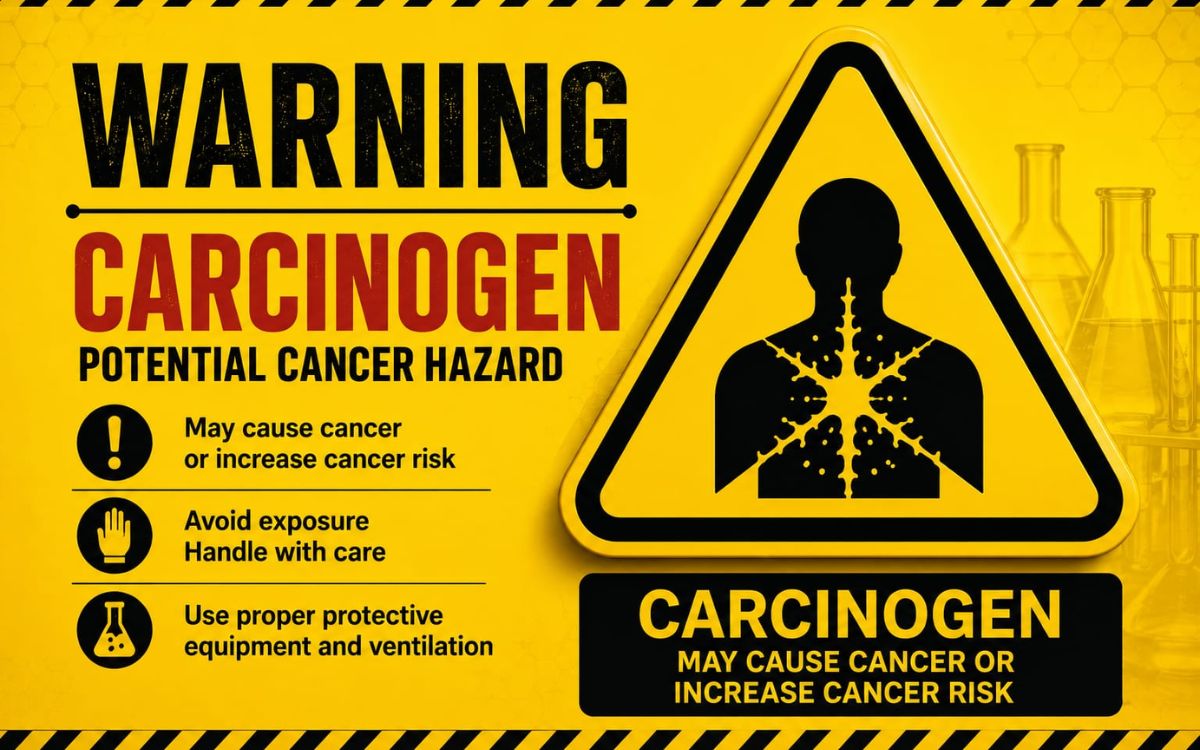
Unlike hazards such as fire or explosion, the danger from a carcinogen isn’t always immediately visible. That’s exactly why this warning symbol exists to flag risks that build up over repeated or prolonged exposure, long before any symptoms appear. Recognizing it quickly helps workers:
- Choose the right protective equipment before exposure occurs
- Avoid unnecessary skin or inhalation contact
- Understand that “safe looking” liquids or powders can still carry serious long-term risk
Frequently Asked Questions
What does the carcinogen symbols look like?
It’s a black silhouette of a person with a white, star shaped burst on the chest, framed inside a red diamond border.
Is the carcinogen symbol the same as the Health Hazard symbol?
Yes, “carcinogen symbol” is a common nickname for the official GHS Health Hazard pictogram (GHS08).
Is the carcinogen symbols the same under OSHA, GHS, and WHMIS?
Yes, all three systems use the same standardized pictogram design since they are aligned under the Globally Harmonized System.
Can I copy and paste the exact GHS carcinogen symbols as text?
No, the official pictogram is a graphic, not a Unicode character, so it must be used as an image file for compliant labeling.
What other hazards share the carcinogen symbols?
Mutagenicity, reproductive toxicity, respiratory sensitization, target organ toxicity, and aspiration hazard all use the same pictogram.
Why do some labels show the carcinogen symbols alongside other hazard icons?
Because a single chemical can pose multiple risks at once, such as being both carcinogenic and corrosive or acutely toxic.
Final Thoughts
The carcinogen symbol is a small image with a big responsibility warning workers, students, and consumers about hazards that aren’t always obvious at first glance. Whether you’re studying GHS classifications, setting up a compliant lab label, or simply trying to understand what a warning icon on a product means, recognizing this symbol (and the hazards it represents) is a key part of staying safe around hazardous chemicals.
Understanding how this pictogram works across GHS, OSHA, and WHMIS systems ensures you’re reading hazard information correctly no matter where in the world a product was labeled.
