

The direct hit symbol 🎯 is one of the most recognisable emojis on your keyboard. It shows a red and white target with a dart sitting in the center, and it says “on point” faster than a sentence can. You will see it in business posts, gaming chats, study planners, and product launches.
This guide covers the direct hit symbol meaning, its history, Unicode details, fonts, PNG downloads, and copy and paste options. You will also find platform tips, similar symbols, and answers to common questions.
Quick copy: 🎯
What Is the Direct Hit Symbol?
The direct hit symbol is a pictograph of a dartboard or archery target with a dart in the bullseye. Its official Unicode name is “Direct Hit.” In most emoji keyboards and in the Unicode Common Locale Data Repository (CLDR), it is now labelled “Bullseye.”
Here are the key facts at a glance:
| Property | Detail |
|---|---|
| Symbol | 🎯 |
| Unicode name | Direct Hit |
| CLDR short name | Bullseye |
| Code point | U+1F3AF |
| Unicode block | Miscellaneous Symbols and Pictographs |
| Category | Activities (subcategory: game) |
| Unicode version | 6.0 (2010) |
| Also known as | Dart emoji, target emoji, archery target |
| Common keywords | target, dart, hit, goal, game, accuracy, bullseye |
Different sites list the emoji version slightly differently. Some show Emoji 0.6 and others show Emoji 1.0. The core fact stays the same: the character has been in Unicode since version 6.0 and works almost everywhere.
Read Also This Blog: Hourglass Symbol
Direct Hit Symbol Meaning
At its simplest, the direct hit symbol means you aimed at something and hit it. That idea stretches across many settings, which is why 🎯 is so popular. Below are the main meanings people attach to it.
1. Precision and Accuracy
The emoji stands for being exact. If a plan, answer, or comment lands perfectly, 🎯 is the quick way to show it.
2. Goal Achievement
Posting a finished milestone? Adding 🎯 signals “goal reached.” It is common in year-end recaps and sales reports.
3. Focus and Determination
A dart needs a steady hand. The symbol often shows up in motivation posts about staying locked on a target.
4. Agreement and Validation
In chats, replying “🎯” to a message means “exactly right” or “you nailed it.”
5. Target Audience
Marketers use it to mark audience targeting, buyer personas, and campaign aims.
6. Strategy and Planning
Project managers add it to roadmaps, OKR lists, and task boards to flag objectives.
7. Darts and Games
Literally, it represents darts, archery, shooting games, and bar games.
8. Winning and Success
It works as a small trophy. A win, a high score, or a deal closed can all earn a 🎯.
9. Marketing and Advertising
Ad copy uses it for “targeted ads,” “laser focus,” and “hit your numbers.”
10. Education and Study Goals
Students and teachers use it for learning outcomes, exam targets, and study checklists.
11. Fitness and Health Targets
Step counts, weight goals, and workout streaks often carry the emoji.
12. Direct Answers
On social media, a single 🎯 under a post can mean “this is the right answer.”
13. Sniper Style Accuracy
In gaming, it can mean a perfect shot or a headshot style play.
14. Business Objectives
Leaders use it in presentations to mark the main aim of a slide or section.
15. Spot On Humor
Sometimes it is sarcastic. A playful 🎯 after a very obvious comment can be a joke.
The real meaning always depends on tone and context. A 🎯 in a work email reads as professional. The same emoji in a group chat reads as casual praise.
Direct Hit Symbol History
The story of the direct hit symbol starts with emoji culture in Japan. Early mobile phone carriers there created sets of small pictures for messaging. A dart on a target was among the common images, since games and goals are everyday topics.
When Unicode began adding emoji to the standard, 🎯 was included in Unicode 6.0, released in 2010. It was assigned the code point U+1F3AF and the formal name “Direct Hit.” That name came from the idea of a dart striking its mark.
Over time, the name used in keyboards changed. The CLDR project, which supplies names and search keywords for emoji, labels it “bullseye.” Many apps now show “Bullseye” while the older “Direct Hit” name remains in the Unicode character database. Both names point to the same character.
Apple, Google, Microsoft, Samsung, and Twitter (X) each redesigned the artwork over the years. Early versions often used a flat red circle with an arrow. Newer versions use detailed gradients, 3D style shading, and a clear dart.
Key timeline points:
- Early 2000s: Japanese carriers use dart and target pictures in messages
- 2010: Unicode 6.0 adds the Direct Hit character
- 2010s: Android, iOS, Windows, and web platforms add full support
- Today: The symbol is supported across almost every device and app
Direct Hit Symbol Unicode and Technical Details
If you build websites or apps, the codes below are useful. They let you insert the symbol without copying it.
| Format | Code |
|---|---|
| Unicode | U+1F3AF |
| HTML decimal | 🎯 |
| HTML hex | 🎯 |
| CSS | \1F3AF |
| JavaScript | \u{1F3AF} |
| Python | \U0001F3AF |
| Java | \uD83C\uDFAF |
| UTF-8 bytes | F0 9F 8E AF |
| UTF-16 | D83C DFAF |
Some technical notes help with display problems:
- The character is classed as an “Other Symbol” and has emoji presentation by default.
- It has a wide East Asian width, so it takes up two character spaces in some terminals.
- You can request a plain, monochrome look by adding the variation selector U+FE0E after it.
- It is a single code point, so it does not rely on joiners or skin tone modifiers.
Direct Hit Symbol Font
A common question is which font shows the direct hit symbol. The answer is that color emoji fonts supply the artwork, not regular text fonts.
| Platform | Emoji font |
|---|---|
| Windows | Segoe UI Emoji |
| macOS and iOS | Apple Color Emoji |
| Android and Chrome OS | Noto Color Emoji |
| Samsung phones | Samsung Emoji |
| Linux | Noto Color Emoji (common default) |
| Web fallback | Twemoji, OpenMoji, Noto |
If you want a black and white version, look at fonts with a monochrome emoji set such as Noto Emoji or Symbola. These fonts draw the target in simple lines, which is handy for print, embroidery, or logos.
For CSS, a safe font stack looks like this:
font-family: "Apple Color Emoji", "Segoe UI Emoji", "Noto Color Emoji", sans-serif;This tells the browser to pick the right emoji font for the visitor’s device.
Direct Hit Symbol Text
Sometimes you want the target in plain text, such as in a terminal, a code comment, or a bio that blocks emojis. Here are text options.
Emoji Text Version
Just paste 🎯 directly. It is text as far as the system is concerned, even though it looks like an image.
Text Style Version
Add the variation selector to request a flat look: 🎯︎
ASCII Style Alternatives
These are not official but are widely understood:
- (o) a simple bullseye
- (@) a ringed target
- ->(o) an arrow hitting a target
- —> an arrow in flight
Word Alternatives
When symbols fail, write “bullseye,” “on target,” or “spot on.”
Direct Hit Symbol Copy and Paste
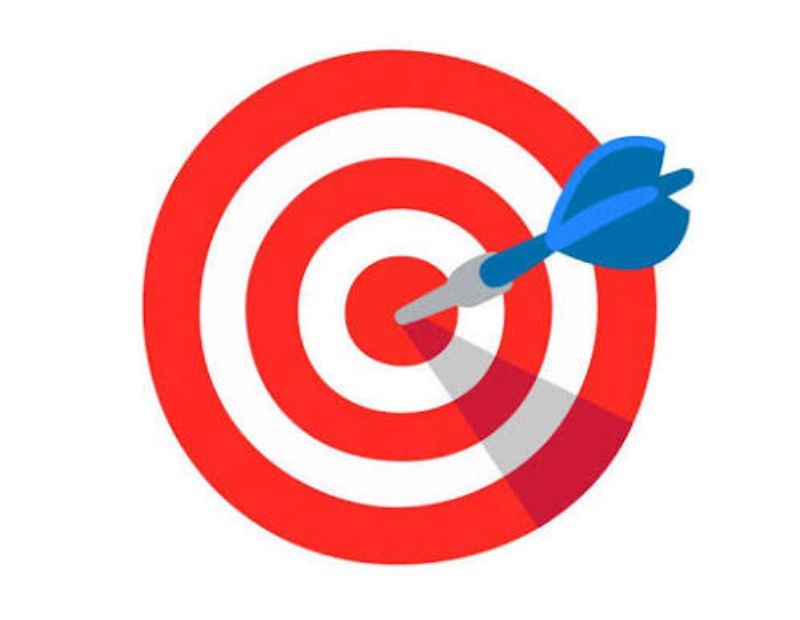
This is the fastest part. Select the symbol below and copy it.🎯
Copy ready examples:
- 🎯 Goal achieved
- 🎯 Target audience
- 🎯 Spot on!
- 🎯 Aim high
How to Copy and Paste on Any Device?
- Highlight the 🎯 symbol with your mouse or finger.
- Press Ctrl + C (Windows) or Cmd + C (Mac). On phones, tap Copy.
- Click into your document, post, or message.
- Press Ctrl + V, Cmd + V, or tap Paste.
How to Type It Without Copying?
| Device | Method |
|---|---|
| Windows 10 and 11 | Press Win + period (.) and search “target” or “dart” |
| Mac | Press Control + Command + Space and search “bullseye” |
| iPhone | Switch to the emoji keyboard and search “bullseye” or “direct hit” |
| Android | Open the emoji panel in Gboard and search “dart” |
| Google Docs | Insert menu, then Emoji, then search “bullseye” |
| Word | Use Win + period or the Insert Symbol panel |
Typing “bull,” “dart,” “direct,” or “target” in most emoji search boxes will bring it up.
Direct Hit Symbol Emoji
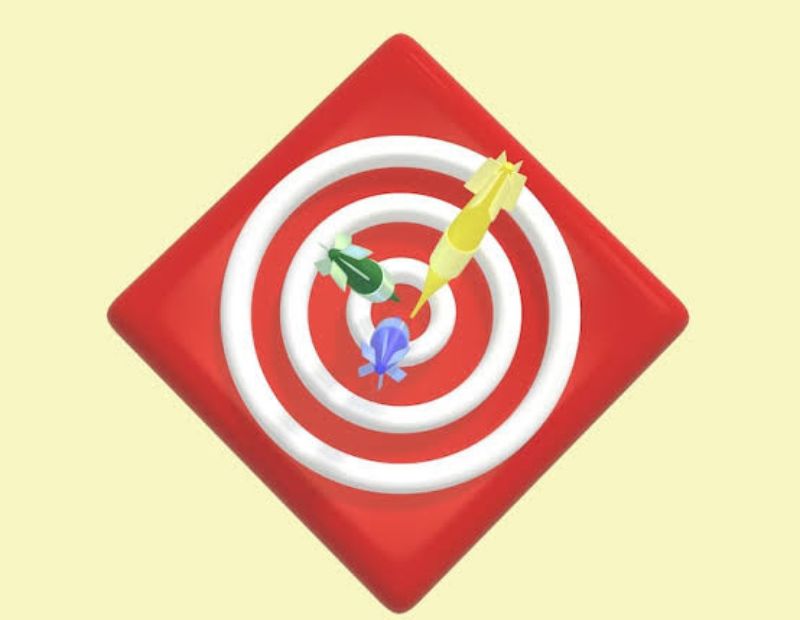
The 🎯 emoji appears under the Activities group, next to games and sports icons like 🎳, 🎮, and 🎲. Its sets of keywords make it easy to find.
How It Looks on Different Platforms?
Each company draws the emoji its own way, so the design changes slightly from one device to another.
| Platform | Typical look |
|---|---|
| Apple | Detailed red and white rings, a dart with a blue body |
| Clean flat style with a bright dart | |
| Samsung | Slightly glossy target with a sharp dart tip |
| Microsoft | 3D style with soft shading |
| Follows the Apple style on most devices | |
| Twitter (X) | Flat Twemoji with bold colors |
| Rounded, friendly look |
Before you send a message, remember the emoji may look a little different to the person on the other end. The meaning stays the same.
Emoji Combinations With 🎯
Pairing emojis adds nuance. Here are popular combos:
- 🎯✅ Goal completed
- 🎯🔥 Perfectly on fire
- 🎯💯 Spot on, full marks
- 🎯🚀 Aiming for growth
- 🎯📈 Hitting targets and rising numbers
- 🎯🏆 Win and success
- 🎯💼 Business goals
- 🎯📚 Study objectives
Direct Hit Symbol PNG
Designers, bloggers, and students often need a PNG file of the emoji. PNG works well because it keeps a transparent background.
Where to Get a Direct Hit Symbol PNG?
- Open emoji libraries such as Noto Emoji, Twemoji, and OpenMoji
- Emoji reference sites that let you download platform specific images
- Favicon generators that turn the emoji into ICO, PNG, SVG, and Apple Touch icons
- Design tools such as Canva and Figma, which have built in emoji sets
Quick Tips for Using PNG Versions
- Pick a size of at least 512 by 512 pixels for printing
- Use SVG when you need a sharp image at any size
- Check the license. Some sets are free for commercial use, others require credit
- Keep the file name descriptive, for example
direct-hit-symbol.png, which helps image SEO
Using the Emoji as a Website Favicon
You can set 🎯 as your site icon with one line of HTML. Add this to the head of your page:
<link rel="icon" href="data:image/svg+xml,<svg xmlns=%22http://www.w3.org/2000/svg%22 viewBox=%220 0 100 100%22><text y=%22.9em%22 font-size=%2290%22>🎯</text></svg>">It is a quick trick for personal sites, landing pages, and test projects.
Direct Hit Symbol at (Where to Use It)
People searching “direct hit symbol at” usually want to know where the emoji fits. It also connects to the “@” sign, because many users place 🎯 next to a mention when they call out a person.
Best Places to Use the Symbol
- Social media captions: Instagram, LinkedIn, X, and Facebook
- Messaging apps: WhatsApp, Telegram, iMessage, and Slack
- Email subject lines: A single 🎯 can lift attention when used sparingly
- Presentations: Mark key objectives or takeaways
- Project tools: Notion, Trello, Asana, and ClickUp
- Resumes and bios: Use only if the style fits your field
- Gaming chats: Celebrate a perfect shot
Using 🎯 With the @ Sign
A common pattern is: “@name 🎯 exactly what I meant.” The emoji confirms that the person’s comment was right. In team channels, it acts as a quiet thumbs up with a bit more flair.
Where to Avoid It?
- Formal legal letters
- Serious or sensitive messages
- Condolence notes
- Anything that may confuse the reader
Direct Vector Symbol
The phrase “direct vector symbol” appears in related searches. It is a different idea from the emoji, but the two often overlap in people’s minds because both involve direction and aim.
In math and physics, a vector shows both size and direction. Several symbols are used for it.
| Symbol | Name | Use |
|---|---|---|
| → | Rightwards arrow (U+2192) | Direction in diagrams and notation |
| ↗ | North east arrow (U+2197) | Upward trend or angle |
| ⃗ | Combining right arrow above (U+20D7) | Placed over a letter to mark a vector, such as v⃗ |
| ⇒ | Rightwards double arrow (U+21D2) | Logical implication |
| ➤ | Black rightwards arrowhead (U+27A4) | Pointers and bullets |
If you need a vector graphic of the direct hit symbol itself, search for an SVG file. SVG is a vector format, so the target stays sharp when scaled. This is the format to choose for logos, banners, and print work.
Direct Hit Symbol Icon
An icon version of the target is used in apps, dashboards, and websites. It usually appears as a simplified set of rings with a dot or arrow in the middle.
Common Icon Uses
- Goal tracking and OKR dashboards
- Ad targeting and audience tools
- Gaming interfaces and score screens
- Search and location features
- Productivity and habit apps
Icon Style Options
| Style | Best for |
|---|---|
| Line icon | Clean, modern interfaces |
| Solid icon | Buttons and toolbars |
| Color emoji icon | Social posts and chat |
| Flat icon | Presentations and infographics |
| 3D icon | Marketing banners and thumbnails |
Popular icon libraries such as Font Awesome, Material Icons, and Feather include bullseye or target icons. They are scalable and easy to recolor.
Similar Symbols to the Direct Hit Symbol
Sometimes 🎯 is not exactly what you need. These cousins might fit better.
| Symbol | Name | Code point | Typical meaning |
|---|---|---|---|
| ◎ | Bullseye | U+25CE | Simple text target |
| ⊙ | Circled dot operator | U+2299 | Center point, math use |
| ◉ | Fisheye | U+25C9 | Selected option or focus |
| ⦿ | Circled bullet | U+29BF | Target style bullet |
| ⌖ | Position indicator | U+2316 | Crosshair or aim point |
| 🏹 | Bow and arrow | U+1F3F9 | Archery and aiming |
| 🔍 | Magnifying glass | U+1F50D | Searching and focus |
| ✅ | Check mark button | U+2705 | Task completed |
The text symbols ◎, ⊙, and ⌖ work in places where color emojis are blocked, such as some code editors and plain text files.
Practical Tips for Using the Direct Hit Symbol
Good emoji use is about restraint. A few simple habits make your content feel natural.
- Match the tone. Use 🎯 where praise, goals, or accuracy make sense.
- Keep it sparse. One emoji per sentence is plenty. A wall of targets feels spammy.
- Lead with value. The emoji should support the message, not replace it.
- Test on devices. Preview your post on both phone and desktop.
- Mind the audience. Younger or casual audiences accept emojis more easily than formal ones.
- Add a text fallback. Screen readers read it as “bullseye” or “direct hit,” so make sure the surrounding sentence still makes sense.
Examples in Real Sentences
- “We hit 10,000 subscribers this week 🎯”
- “Your point about pricing is 🎯”
- “Our target audience: busy parents 🎯”
- “Goal for May: read three books 🎯”
Is the Direct Hit Symbol Good for SEO?
Emojis can help a title or meta description stand out in search results, but they are not a ranking factor. Search engines display many of them, which can improve click through rates when used with care.
A few practical points:
- Use one emoji at most in a title tag
- Do not replace key words with emojis
- Keep the main phrase, such as “direct hit symbol,” in plain text
- Use descriptive alt text for any PNG, for example “direct hit symbol bullseye emoji”
- Add a short answer near the top of the page to target featured snippets
Fun Facts About the Direct Hit Symbol
- The official Unicode name and the common keyboard name are different, which confuses many people.
- It sits inside the Miscellaneous Symbols and Pictographs block, along with many other everyday emojis.
- The emoji is available in dozens of languages, and its label changes. French calls it “dans le mille,” Spanish uses “diana,” and German uses “Darts.”
- It has no skin tone options, since it shows an object, not a person.
- Its use in business writing has grown much faster than its use in games.
- A dart in the center is the usual picture, but some older designs used an arrow.
Conclusion
The direct hit symbol 🎯 is a small picture with a big message. It means accuracy, focus, success, and agreement, all in one character. Its roots go back to early Japanese mobile emoji, it joined Unicode in 2010, and today it is supported on nearly every device.
Now you know its meaning, history, code point, fonts, PNG options, and where to place it. Copy it, use it with intention, and let it do what it does best: land your point right in the center.
Frequently Asked Questions
What does the direct hit symbol mean?
It means hitting a goal or target with accuracy. People use 🎯 to show success, focus, and agreement.
What is the Unicode for the direct hit symbol?
The Unicode code point is U+1F3AF. It was added in Unicode 6.0 in 2010.
Is the direct hit emoji the same as the bullseye emoji?
Yes. “Direct Hit” is the official Unicode name and “Bullseye” is the common keyboard name for 🎯.
How do I copy and paste the direct hit symbol?
Select 🎯, press Ctrl + C or Cmd + C, then paste it with Ctrl + V or Cmd + V. On a phone, tap Copy and Paste.
How do I type the direct hit symbol on Windows?
Press Win + period, then search “dart” or “bullseye.” Click the symbol to insert it.
How do I type the direct hit symbol on a Mac?
Press Control + Command + Space and search “bullseye.” Double click the emoji to add it.
What is the HTML code for the direct hit symbol?
Use 🎯 or 🎯 in your HTML. Both display 🎯.
Which font displays the direct hit symbol?
Color emoji fonts such as Apple Color Emoji, Segoe UI Emoji, and Noto Color Emoji display it. The look varies by platform.
Can I download the direct hit symbol as a PNG?
Yes. Open emoji libraries like Twemoji, Noto Emoji, and OpenMoji offer PNG and SVG downloads. Check each license before commercial use.
Is there a text version of the direct hit symbol?
Yes. Add the variation selector U+FE0E for a flat look, or use ◎ and ⌖ as plain text alternatives.
What is the difference between the direct hit symbol and a vector symbol?
The direct hit symbol is an emoji for goals and accuracy. A vector symbol, like → or v⃗, shows direction and magnitude in math.
Does the direct hit emoji look the same on every device?
No. Apple, Google, Samsung, Microsoft, and others draw their own versions, but the meaning stays the same.
Can I use the direct hit symbol as a favicon?
Yes. You can use an emoji favicon through an SVG snippet or a favicon generator.
What emojis go well with the direct hit symbol?
✅, 🔥, 💯, 🚀, 📈, and 🏆 pair nicely to show completed goals and success.
Is it okay to use 🎯 in professional emails?
Yes, in moderation. One emoji in a friendly work email is fine, but avoid it in formal or sensitive messages.
