
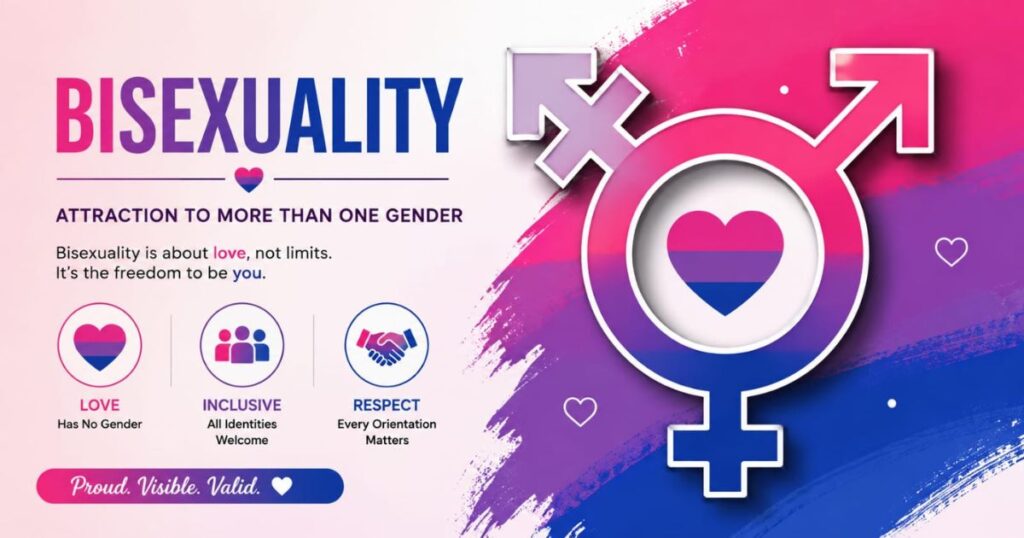
Bisexuality doesn’t have just one symbol, it has a whole visual language that’s built up over nearly four decades. From flags to moons to a small Unicode character tucked away on your keyboard, each symbol carries its own backstory. This guide breaks down every major bisexual symbol, what it means, where it came from, and how to copy, wear, or use it yourself.
What Is the Bisexual Symbol?
There’s no single “official” bisexual symbol the way the rainbow works for the wider LGBTQ+ community. Instead, bisexuality is represented by a small family of related symbols:
- The bisexual pride flag (pink, purple, blue stripes)
- The biangles (overlapping pink and blue triangles)
- The double moon symbol (two crescent moons)
- The bisexual Unicode symbol (⚥)
Each one emerged at a different point in LGBTQ+ history, and each still shows up today in flags, jewelry, tattoos, and social media bios.
Read Also This Blog: Amazing Carbon Dioxide Symbol
Bisexual Symbol Meaning
At its core, every bisexual symbol is built around one idea: overlap. Whether it’s two colors blending into a third, two triangles intersecting, or two moons facing each other, the visual theme is the same attraction that spans more than one gender, rather than sitting on one side of a strict either/or line. The biangles symbol works this way too, with two intersecting triangles in pink and blue creating a lavender triangle where they overlap. The same pink-purple-blue logic that carries directly into the modern flag.
Bisexual Symbol Flag
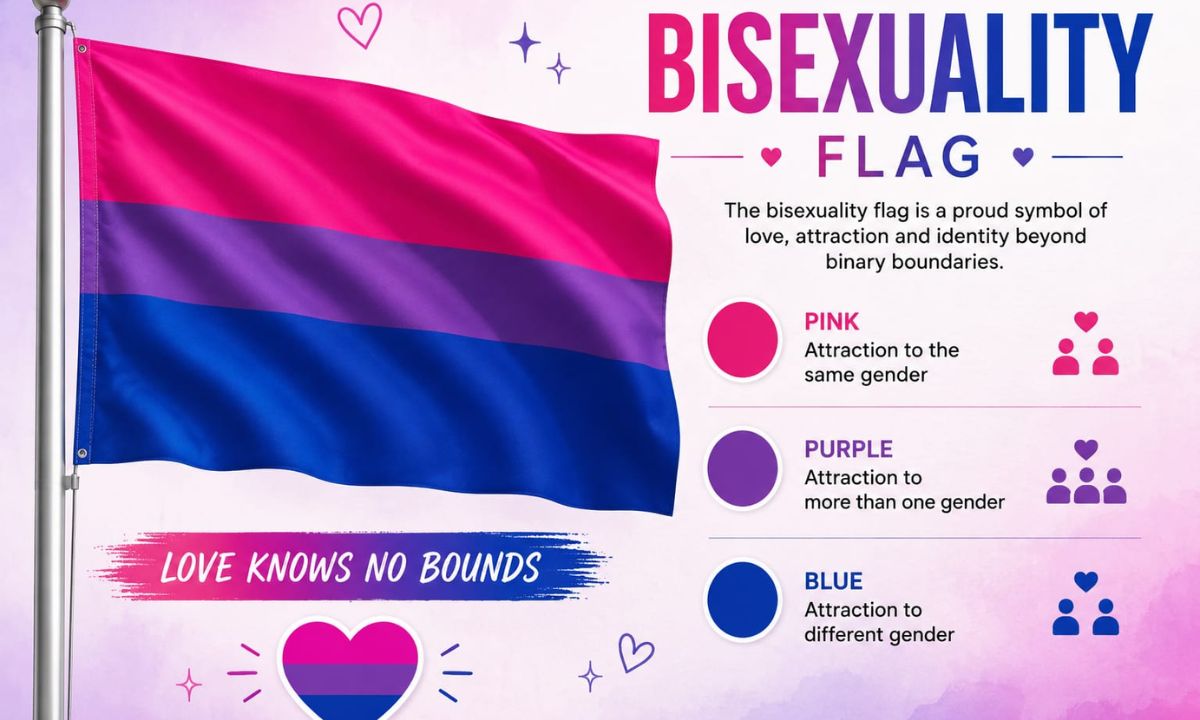
The bisexual pride flag is the most recognized symbol today. It’s a pride flag representing bisexuality, bisexual individuals, and the bisexual community, consisting of three solid horizontal bars: two-fifths pink, one-fifth purple, and two-fifths blue, designed by Michael Page in 1998.
What the colors mean:
| Color | Position | Meaning |
|---|---|---|
| Pink/Magenta | Top stripe | Attraction to the same gender |
| Purple | Thin center stripe | Attraction to more than one gender (the “overlap”) |
| Blue | Bottom stripe | Attraction to a different gender |
According to Page, pink represents same-sex attraction and blue represents opposite sex attraction, while the purple stripe in the middle overlaps the two colors, symbolizing more than one type of attraction.
Bisexual Flag Copy and Paste:
🟥🟥🟥🟥🟥🟥🟥🟥🟥
🟪🟪🟪🟪🟪🟪🟪🟪🟪
🟦🟦🟦🟦🟦🟦🟦🟦🟦
Or the simpler emoji shorthand: 💗💜💙
Bisexual Triangle Symbol
Before the flag existed, there were the biangles: two overlapping triangles that are arguably the original bisexual symbol.
The biangles are interlocking triangles in the original shades of blue, purple (lavender), and pink, created by Liz Nania as a bisexual pride symbol long before the bisexual pride flag was invented. The original artwork was painted by Nania in 1985, taking the commonly used inverted triangle . A symbol the Nazis used to identify gay men in concentration camps and that was undergoing reclamation in the USA and adding lavender and blue to represent the liminality of bisexuality.
By 1987, the design had spread widely, used as a motif on BiNet USA merchandise and by regional North American groups. Michael Page later said the flag’s colors and overlap pattern were directly inspired by this triangle design.
Some people prefer the triangle version over the flag precisely because of its shared history with the pink triangle. It feels more rooted in LGBTQ+ activism. Others avoid it for the same reason, given the triangle’s origin as a Nazi-era badge before reclamation.
Bisexual Symbol Double Moon
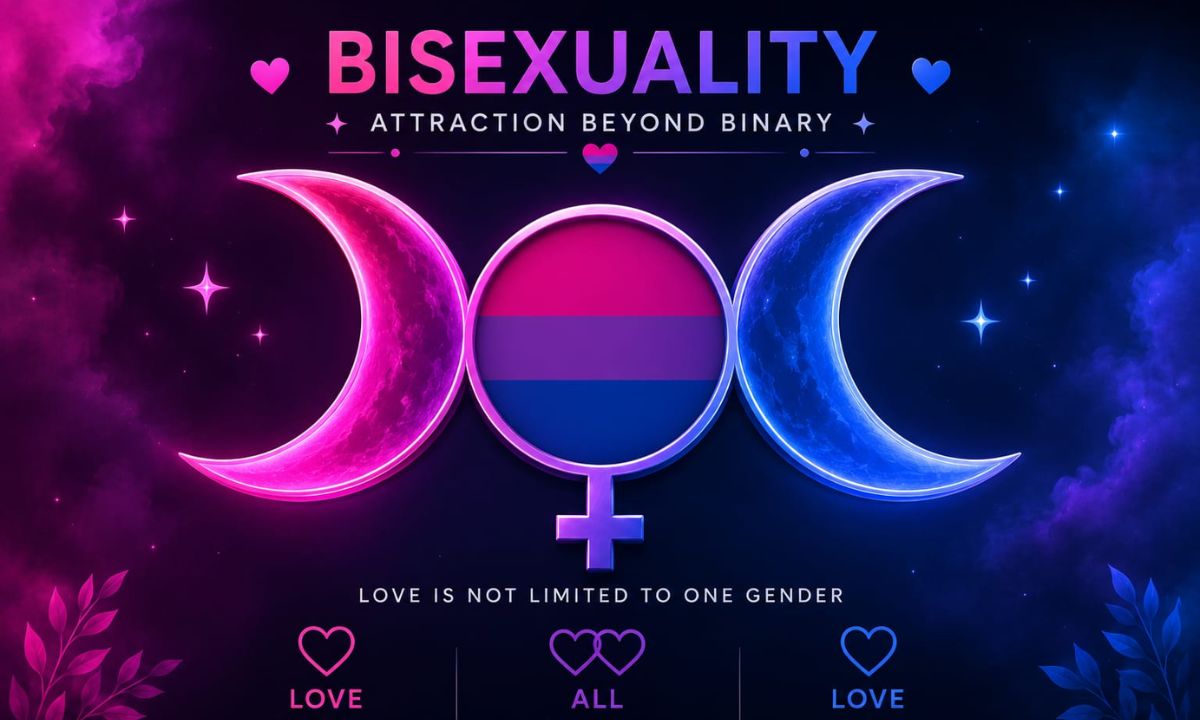
For those who want something subtler than the flag or the triangle, the double moon symbol is a popular alternative. It typically shows two crescent moons, either facing away from each other or overlapping slightly.
Some bisexuals used this same pink, purple, blue color scheme depicted as two crescent moons facing away from each other, specifically to avoid using triangle imagery. One widely cited version, the “bi moon,” is credited to Michael Page as well: introduced during Bisexual Visibility Week as a unifying symbol, combining a crescent moon with overlapping Venus symbols. The crescent representing femininity and the Venus symbols traditionally associated with females.
Double Moon Copy and Paste: 🌗🌓 or ⚥⚥
Because it doesn’t rely on bright colors or an obvious flag shape, the double moon is a favorite for subtle jewelry, tattoos, and low-key pride display.
Bisexual Symbol Flower
Flowers have carried quiet, coded meaning in queer history long before modern pride symbols existed. Violets and their color became a special code used by lesbians and bisexual women, with the symbolism deriving from fragments of poems by Sappho describing a lover wearing garlands or a crown with violets. In 1926, the play La Prisonnière used a bouquet of violets as a coded reference to same-sex love, and the flower’s link to lavender and purple tones has kept it loosely associated with bi and lesbian identity ever since.
Today this isn’t a strict or official symbol the way the flag is, but violets and lavender/purple flowers generally still show up in bi-themed art, wedding bouquets, and jewelry as a nod to that older history. It’s a softer, more decorative option for anyone who wants a subtle reference rather than a flag or triangle.
How to Type the Bisexual Symbol on Any Keyboard?
If you want ⚥ or the biangle-style characters without copying and pasting each time, here are the quickest routes:
- Windows: Hold
Altand type9791on the numeric keypad, then release this produces ⚥ on most systems with Unicode input enabled. - Mac: Open the Character Viewer (
Control + Command + Space), search “male female,” and double-click ⚥ to insert it. - Phone (iOS/Android): Easiest to copy from the reference table below and save it in your keyboard’s text-replacement/shortcut settings so it pastes with a short trigger phrase (e.g., typing “bisym” auto-fills ⚥).
- HTML/websites: Use the HTML entity
☿or the CSS content code\26E5to display ⚥ on a webpage.
Bisexual Symbol In Biology (⚥)
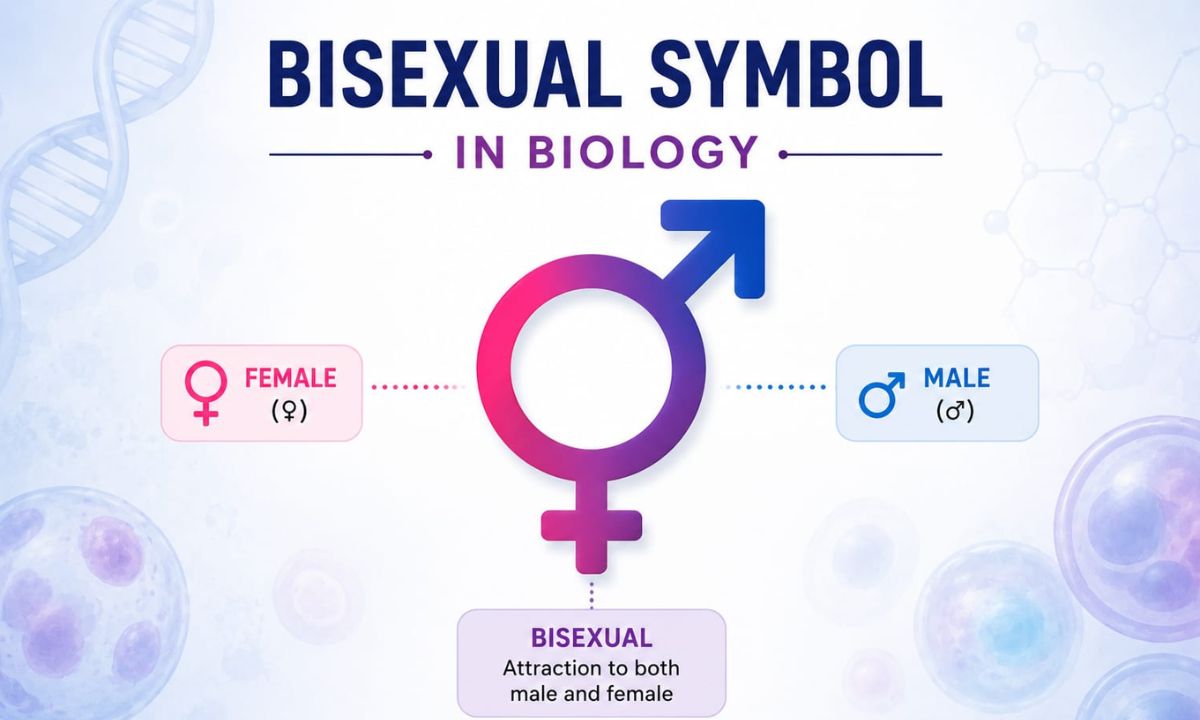
Separate from pride symbolism, “bisexual” is also a real biological term and it has its own dedicated Unicode character: ⚥.
The combined male-female symbol (⚦) is used to represent androgyne or transgender people, while ⚧ indicates gender inclusivity. The related character ⚥ combines the male (♂) and female (♀) glyphs and is used in biology, genetics, and botany to denote an organism with both male and female reproductive structures technically closer to “hermaphroditic” in scientific usage than the human sexual-orientation meaning of “bisexual.”
Bisexual Symbol In Floral Formula
This biological usage carries directly into botany. A bisexual flower, in botanical terms, is one that possesses both male (pollen-producing) and female (seed-producing) parts on the same plant. In a floral formula, the shorthand notation botanists use to describe a flower’s structure. This is marked with the same ⚥ symbol, distinguishing “bisexual” (perfect) flowers from unisexual ones that carry only male or only female parts.
Bisexual Symbol Genogram
Genograms: the family, tree style diagrams used in psychology, counseling, and medical genetics have standardized symbols for sex (circle for female, square for male) and relationship type, but there’s no single, universally agreed upon symbol for sexual orientation, including bisexuality. When a clinician or researcher wants to note bisexuality on a genogram, it’s typically done with a written label, a color code, or a custom legend created for that specific diagram, since no standard notation exists across the field.
Bisexual Animal Symbol / Moth Bisexual Symbol
Moths have become an informal, internet-driven symbol loosely tied to bisexual identity in recent years. This isn’t rooted in official LGBTQ+ history the way the flag or biangles are. It grew mostly out of online meme culture and community humor, sometimes referencing moths’ attraction to multiple light sources as a lighthearted metaphor. It’s playful rather than historical, but it’s become genuinely popular in bi-themed merchandise and art.
Bisexual Symbol Tattoo, Jewelry & Wearables
The symbols above translate easily into things people actually wear:
Popular tattoo designs:
- Small bi pride flag (as a ribbon, banner, or stripe).
- Overlapping biangles in pink and blue.
- Double crescent moons, minimalist line-work.
- The ⚥ symbol, often paired with other meaningful icons.
Wearable/jewelry options:
- Pendant necklaces shaped like the double moon.
- Enamel pins and rings in pink, purple, blue.
- Triangle earrings or rings using the biangle colorway.
- Flag-striped bracelets, lanyards, and pin badges.
Choosing a Bisexual Necklace
When shopping for a bi pride necklace, the main design families are:
- Moon pendants: The most discreet option, often a single crescent or double-moon charm in silver or gold, sometimes with small pink/purple/blue gemstone accents.
- Flag bar necklaces: A small horizontal bar or rectangle enameled in the three flag colors, worn like a dog tag or delicate chain pendant.
- Infinity/interlocking designs: Rings or pendants using the interlocking male-female style glyphs (related to ⚥) for a more abstract, less immediately “readable” look.
- Triangle charms: Pink and blue triangle pendants referencing the biangles, popular with people who want a design tied to bisexual activist history specifically.
None of these are gendered by design , the same moon pendant or flag bar shows up in listings marketed toward women and toward men. The “for women” / “for men” framing you’ll see in shops is almost always just about overall jewelry styling (e.g., delicate chain vs. thicker band), not a different symbol.
Bisexual Symbol Text and Emoji Copy and Paste
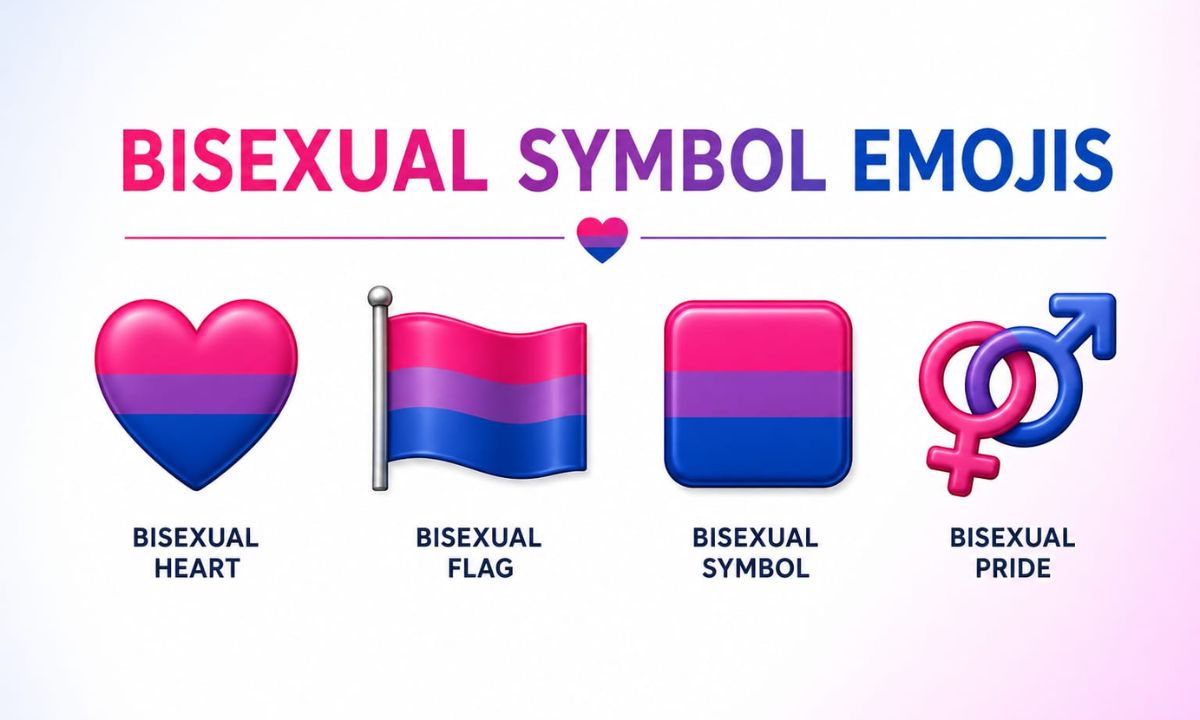
| Symbol Type | Copy and Paste |
|---|---|
| Bi Flag (color blocks) | 🟥🟥🟥 / 🟪🟪🟪 / 🟦🟦🟦 |
| Bi Flag (emoji shorthand) | 💗💜💙 |
| Double Moon | 🌗🌓 |
| Biology/Botany Symbol | ⚥ |
| Text-only version | [bi] or “pink/purple/blue” |
There’s no single dedicated “bisexual” emoji baked into standard Unicode the way there is for some other identities most people combine the three flag-colored hearts (💗💜💙) or use the ⚥ character as a stand in.
Conclusion
Bisexual symbolism has grown a lot since Liz Nania first painted the biangles in 1985. Today, whether someone wants a bold flag, a subtle double moon, a small ⚥ on a pendant, or just three colored hearts in a bio, there’s a version of the bisexual symbol to match. Each one ties back to the same idea attraction that overlaps rather than picks a single side and knowing the history behind them makes wearing, tattooing, or typing them mean a little more.
FAQs
What is the official bisexual symbol?
There’s no single official symbol, but the pink-purple-blue pride flag designed by Michael Page in 1998 is the most widely recognized.
What does the double moon symbol mean?
It represents bisexuality through two crescent moons, offering a subtler alternative to the flag or triangle designs.
What is the biology symbol for bisexual?
The character ⚥, combining the male (♂) and female (♀) symbols, is used in biology and botany for organisms with both reproductive types.
Can I copy and paste the bisexual flag as text?
Yes — use colored square emoji (🟥🟪🟦) or the shorthand 💗💜💙 to represent the flag in plain text.
What do the biangles represent?
Two overlapping triangles, pink and blue, created by Liz Nania in 1985 as one of the earliest bisexual pride symbols, predating the flag by over a decade.
Is the moth a real bisexual pride symbol?
Not historically, it’s a newer, informal symbol that grew out of internet culture rather than official LGBTQ+ symbolism.
Who created the bisexual pride flag?
Michael Page, a Florida-based bisexual activist, designed and released the flag on December 8, 1998, basing its colors on the earlier biangles design.
What’s the difference between the biangles and the bi flag?
The biangles (1985) are two overlapping triangles; the flag (1998) turned that same color logic into three simple horizontal stripes for easier mass use.
Are violets a bisexual symbol?
Historically yes, violets and lavender tones were used as a coded reference to lesbian and bisexual love as far back as Sappho’s poetry, though it’s a softer, less-used symbol today compared to the flag.
Does the bisexual symbol have a genogram standard?
No, genograms have no agreed-upon orientation symbol, so bisexuality is usually noted with a label or custom key rather than a universal icon.
