

Every civilization speaks a silent language made of colors, objects, animals, and gestures. This silent language is built from cultural symbols, the visual and material markers that carry the beliefs, history, and identity of a community across generations.
From the olive branch that represents peace to the dragon that embodies wisdom in Asian folklore, cultural symbols help people express who they are without saying a single word. In this guide, you will explore the meaning, history, and real world examples of cultural symbols from around the globe, along with practical answers to the most searched questions on this topic.
What Are Cultural Symbols?
Cultural symbols are objects, images, colors, gestures, or practices that hold a shared meaning within a specific group of people. They act as a bridge between abstract values like freedom, unity, or spirituality and something tangible that people can see, wear, or celebrate.
A symbol becomes cultural when an entire community agrees, often without ever discussing it directly, that the object represents something bigger than itself. A flag is just fabric until a nation gives it meaning. A flower is just a plant until a religion turns it into a sign of purity.
Read Also This Blog: Beautiful Cloud Symbols
Key Characteristics of Cultural Symbols
- They are collectively understood within a group 🌍
- Their meaning can change over time or across borders 🔄
- They connect people to history, religion, or nationality 🏛️
- They can be tangible (objects) or intangible (gestures, sounds) 🎭
- They help outsiders identify and understand a culture at a glance 👁️
Cultural Symbols Meaning and Why They Matter?
The meaning behind a cultural symbol usually comes from centuries of shared experience, mythology, or survival. For example, the color red signals good fortune in China but can represent mourning in parts of South Africa. Context always shapes interpretation.
Cultural symbols matter because they:
- Preserve heritage that might otherwise fade away 📜
- Create a sense of belonging among community members 🤝
- Help pass traditions from one generation to another 👨👩👧👦
- Strengthen national or ethnic pride 🇮🇳
- Serve as tools for diplomacy, branding, and storytelling 🎨
A Brief History of Cultural Symbols
Cultural symbolism is as old as human civilization itself. Early humans used cave paintings, carved totems, and natural elements like fire and water to represent survival, spirituality, and community bonds.
As societies grew more complex, symbols evolved alongside them:
| Era | Symbol Type | Example |
|---|---|---|
| Ancient civilizations | Religious and royal icons | The Egyptian ankh representing life |
| Medieval period | Heraldry and flags | Family crests and kingdom banners |
| Colonial era | National emblems | Flags representing independence movements |
| Modern era | Branding and pop culture icons | National sports mascots and logos |
| Digital age | Emojis and hashtags | Symbols representing global movements online |
Over time, many of these symbols traveled across borders through trade, migration, and colonization, picking up new layers of meaning along the way.
12 Examples of Cultural Symbols
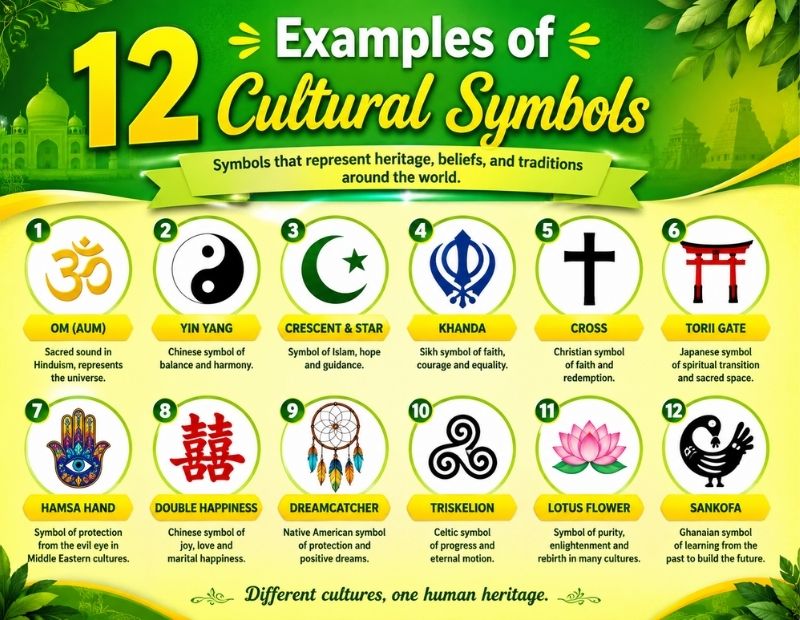
Here are twelve widely recognized cultural symbols and what they represent.
- The Dragon in Chinese culture, symbolizing power, wisdom, and good fortune 🐉
- The Lotus Flower in Buddhism and Hinduism, symbolizing purity and enlightenment 🪷
- The Bald Eagle in the United States, symbolizing freedom and strength 🦅
- The Maple Leaf in Canada, symbolizing natural beauty and national identity 🍁
- The Olive Branch in Mediterranean cultures, symbolizing peace 🕊️
- The Kimono in Japan, symbolizing tradition and craftsmanship 👘
- The Sombrero in Mexico, symbolizing folk heritage 🎩
- The Ankh in Ancient Egypt, symbolizing life and immortality ☥
- The Om Symbol in Hindu philosophy, symbolizing the universe and spirituality 🕉️
- The Kangaroo in Australia, symbolizing national pride and resilience 🦘
- The Peacock in India, symbolizing grace and is the national bird 🦚
- The Shamrock in Ireland, symbolizing luck and heritage ☘️
Cultural Symbols Around the World
Different regions have developed their own set of icons shaped by geography, religion, and history. Below is a quick regional breakdown.
Cultural Symbol of India
The peacock is the national bird of India and a widely recognized cultural symbol representing grace, beauty, and spirituality. Alongside it, the lotus flower and the tricolor flag remain central to Indian identity.
Cultural Symbol of Japan
The cherry blossom, known as sakura, is Japan’s most iconic cultural symbol, representing the fleeting nature of life. The rising sun and the kimono are also deeply tied to Japanese heritage.
Chinese Cultural Symbol
The dragon stands as the most powerful Chinese cultural symbol, representing strength, prosperity, and imperial authority throughout history.
Cultural Symbol in the Philippines
The Philippine eagle and the sampaguita flower are two of the most recognized cultural symbols, representing freedom and purity respectively. The jeepney also functions as a folk symbol of resourcefulness and community life.
Boxing Kangaroo, Australia
The boxing kangaroo is an unofficial but widely embraced cultural symbol of Australia, first popularized during international sailing and sporting events. It represents national competitiveness and larrikin spirit.
Iran Pomegranate as a Cultural Symbol
The pomegranate holds deep symbolic value in Iranian culture, representing fertility, abundance, and rebirth. It appears frequently in Persian poetry, art, and traditional celebrations such as Yalda Night.
UNESCO and the Palestinian Olive Tree
The olive tree is recognized as a powerful cultural symbol of Palestine, representing resilience, connection to the land, and continuity of heritage. Its cultivation practices have been highlighted by UNESCO for their deep cultural significance.
Lugbara Cultural Symbols, Uganda
Among the Lugbara ethnic group of Uganda and the Democratic Republic of Congo, symbols such as ancestral shrines, traditional stools, and specific hairstyles serve as markers of lineage, authority, and spiritual belief.
Gamocha, a Symbol of Assam
Gamocha is a traditional handwoven cotton cloth and a well known cultural symbol of Assam, India. It represents respect, hospitality, and Assamese identity, and is often gifted during festivals and ceremonies.
Food as Cultural Symbols
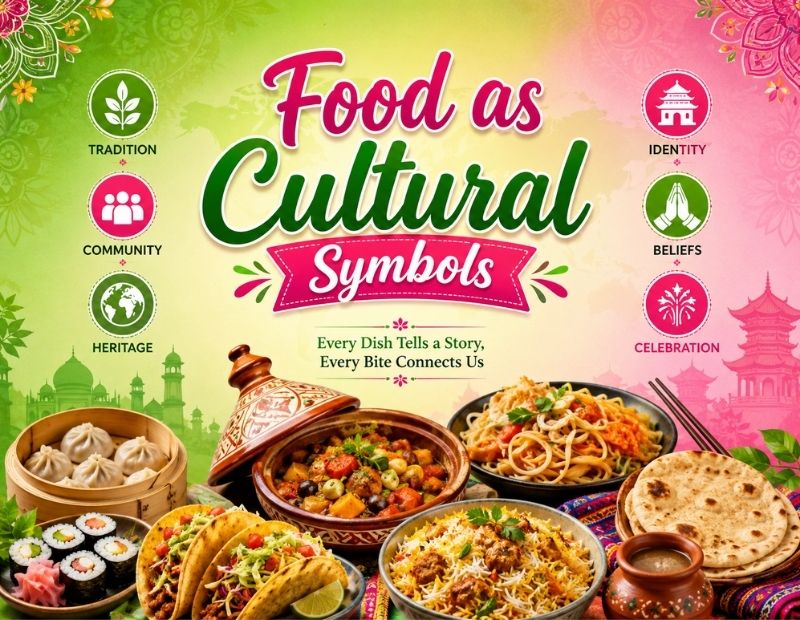
Food is one of the most powerful and accessible forms of cultural symbolism because it engages every sense.
- Pasta represents Italian heritage and family tradition 🍝
- Sushi represents precision and simplicity in Japanese culture 🍣
- Tacos represent Mexican identity and street culture 🌮
- Curry represents the diversity of Indian regional cuisine 🍛
- Bread represents unity and sustenance across many European cultures 🍞
Cultural Symbols of Asian Folk Arts
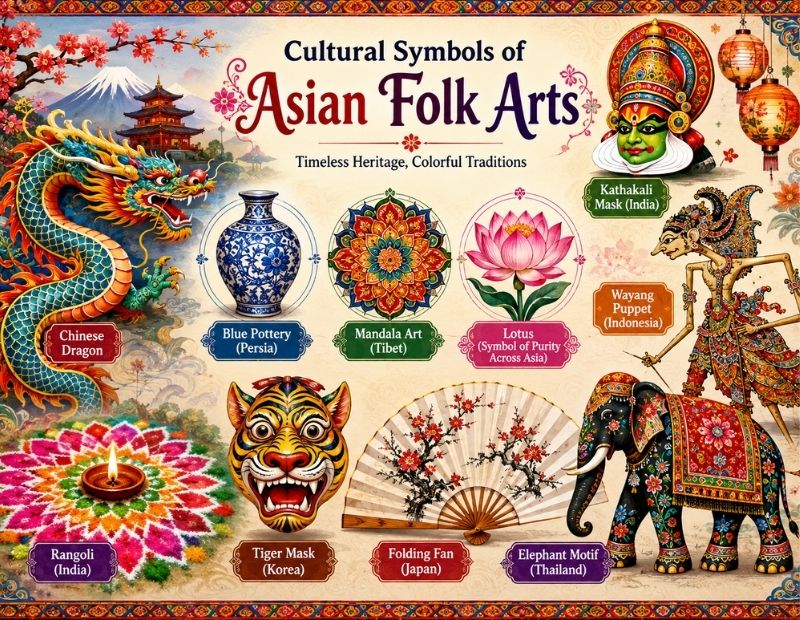
Asian folk art is rich with recurring symbols passed down through generations of craftsmen and storytellers.
- The phoenix, representing rebirth and grace in Chinese art 🔥
- The elephant, representing wisdom and good luck in Southeast Asia 🐘
- Batik patterns, representing regional identity across Indonesia and Malaysia 🎨
- Mandalas, representing balance and spiritual harmony in South Asian art 🌀
- Paper cutting art, representing celebration and folklore in Chinese tradition ✂️
Cultural Symbols in Jewellery
Jewellery is one of the oldest and most personal ways to wear a cultural symbol. Popular choices include:
- The evil eye pendant for protection, common across the Mediterranean and Middle East 🧿
- The Om symbol pendant for spirituality, common in South Asia 🕉️
- The Claddagh ring for love, loyalty, and friendship in Irish tradition 💍
- The ankh pendant for life and eternity, rooted in Ancient Egypt ☥
- The hamsa hand for protection and blessings across several Middle Eastern cultures 🤚
If you are looking for a meaningful piece, choosing a symbol tied to your own heritage or belief system often makes the jewellery far more personal than a purely decorative design.
Cultural Political Symbol and Cultural Property Symbol
Some symbols carry legal or political weight rather than purely traditional meaning.
- A cultural political symbol refers to an image, gesture, or object used to represent a political ideology, movement, or party, such as a raised fist representing solidarity movements ✊
- The cultural property symbol, often called the Blue Shield, is an internationally recognized emblem used to mark protected cultural heritage sites during armed conflict, established under the 1954 Hague Convention 🛡️
- Cultural and educational rights are often represented through symbols like an open book or a torch, commonly used by institutions to signify access to knowledge 📖
Table: Popular Cultural Symbols by Country
| Country | Cultural Symbol | Meaning |
|---|---|---|
| India | Peacock | Grace and spirituality |
| Japan | Cherry Blossom | Beauty and impermanence |
| China | Dragon | Power and prosperity |
| Egypt | Ankh | Life and immortality |
| Ireland | Shamrock | Luck and heritage |
| Australia | Boxing Kangaroo | National pride |
| Mexico | Sombrero | Folk tradition |
| Iran | Pomegranate | Fertility and abundance |
| Palestine | Olive Tree | Resilience and land |
| Assam, India | Gamocha | Respect and identity |
Cultural Symbols Synonym and Related Terms
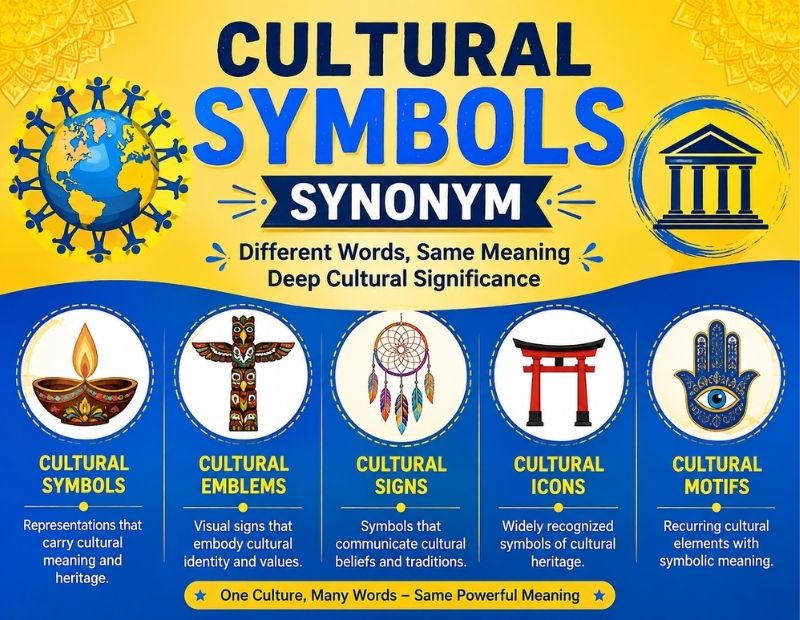
If you are searching for alternative phrasing, common synonyms and related terms for cultural symbols include:
- Cultural icon 🏆
- Cultural emblem 🎖️
- Traditional symbol 🪔
- Heritage symbol 🏺
- National symbol 🇯🇵
- Folk symbol 🎭
How to Draw Cultural Symbols?
Drawing cultural symbols is a popular classroom and design activity because most of them use simple, recognizable shapes.
- Choose a symbol with clear, bold outlines such as a lotus flower or a flag 🖊️
- Sketch the basic shape lightly before adding detail ✏️
- Research the traditional colors associated with the symbol 🎨
- Add cultural patterns or motifs specific to the region 🧵
- Finish with outlining and shading for a polished result 🖼️
Frequently Asked Questions
What is the meaning of a cultural symbol?
A cultural symbol is an object, image, or practice that represents shared values, beliefs, or identity within a specific community.
What are 10 examples of cultural symbols with names?
Common examples include the dragon, lotus flower, bald eagle, maple leaf, olive branch, kimono, sombrero, ankh, Om symbol, and peacock.
What is Gamocha a cultural symbol of?
Gamocha is a traditional handwoven cloth recognized as a cultural symbol of Assam, India.
What is the cultural symbol of the Philippines?
The Philippine eagle and the sampaguita flower are widely recognized cultural symbols of the Philippines.
What is considered a cultural political symbol?
A cultural political symbol is an image or gesture used to represent a political movement or ideology, such as a raised fist or a specific flag color.
What is the cultural property symbol used for?
The cultural property symbol, also called the Blue Shield, marks heritage sites for protection during armed conflict under international law.
Why is the olive tree a cultural symbol of Palestine?
The olive tree represents resilience, land connection, and continuity of heritage for Palestinian communities.
What is the cultural symbol of Japan?
The cherry blossom, or sakura, is Japan’s most iconic cultural symbol, representing the fleeting beauty of life.
Conclusion
Cultural symbols are far more than decorative images or historical artifacts. They are living reminders of what a community values, believes, and hopes to pass on. From the peacock in India to the pomegranate in Iran and the olive tree in Palestine, every symbol tells a story that words alone cannot fully capture.
Whether you are studying these symbols for academic purposes, choosing one for jewellery, or simply curious about the world’s diverse heritage, understanding cultural symbols offers a deeper appreciation of humanity’s shared and distinct identities.
