

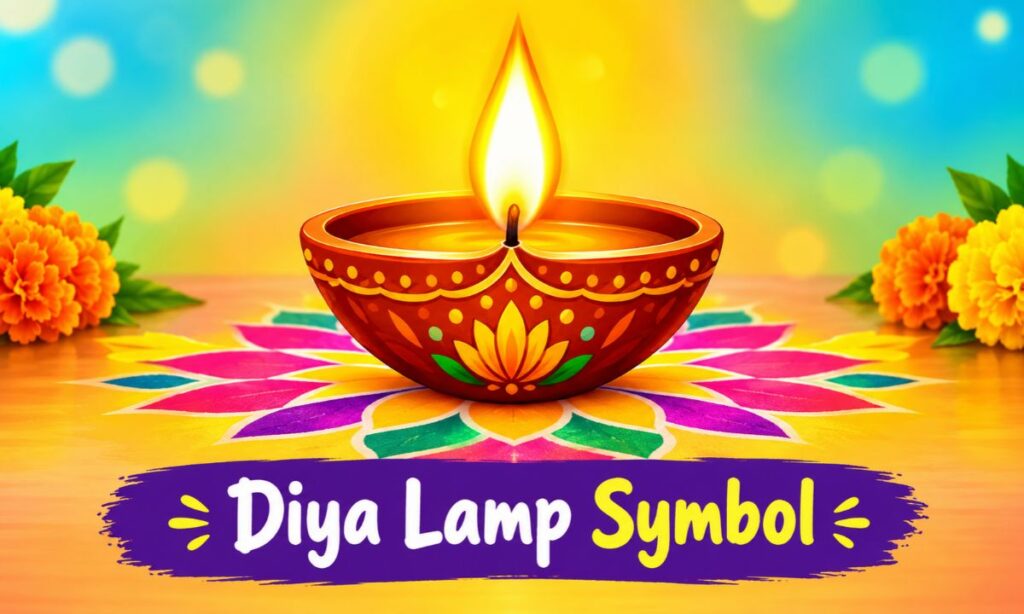
A small flame inside a clay cup looks simple. Yet the diya lamp symbol carries thousands of years of faith, art, and emotion. You see it on festival greeting cards, wedding invitations, temple walls, phone keyboards, and home decor catalogues.
In this guide, you will learn what the diya lamp symbol means, where it is used, how to copy and paste it, how it appears in design plans and PNG files, and how each type of diya (clay, brass, LED, glass, crystal, water, and more) carries its own charm. Whether you are a student, a designer, a blogger, or someone planning a Diwali celebration, this article gives you everything in one place.
What is a Diya Lamp Symbol?
A diya lamp symbol is a visual or written representation of a traditional oil lamp. It usually shows a small, shallow bowl with a pointed rim, a wick, and an upward flame. The word “diya” comes from the Sanskrit word “deepa,” which means lamp or light.
In simple terms, the symbol stands for light that removes darkness. That darkness can be ignorance, sadness, fear, or negativity. The light stands for knowledge, hope, purity, and positive energy.
The symbol exists in several forms:
- A physical lamp lit in homes and temples
- A line drawing or logo used in design
- A Unicode emoji (🪔) used in digital chats
- A decorative motif on fabrics, rangoli, and wall art
Quick Definition for Featured Snippets
The diya lamp symbol is a sacred emblem of light, hope, and victory of good over evil, rooted in Hindu tradition and now used worldwide in festivals, art, and digital communication.
Read Also This Blog: Fire Extinguisher Symbol
What is a Diya Lamp Symbol Used For?
The diya lamp symbol has both religious and everyday uses. People use it to mark celebration, to invite prosperity, and to show respect to a deity or a loved one who has passed away.
Common uses include:
- Daily prayer at home altars
- Festivals such as Diwali, Karthigai Deepam, and Dev Deepawali
- Weddings, engagement ceremonies, and housewarming rituals (griha pravesh)
- Memorial and remembrance ceremonies
- Greeting cards, social media posts, and festival banners
- Logos for wellness brands, yoga studios, and cultural events
- Home decor, table settings, and gift items
Outside India, the symbol has become a way for diaspora communities to stay connected with their roots. It is also used in interfaith events to represent peace and togetherness.
Purpose Of Diya Lamp Symbol
The purpose of the diya lamp symbol goes beyond decoration. It works as a reminder, a blessing, and a message at once.
Here is what it aims to do:
- Spread positivity: The flame is believed to cleanse a space of negative energy.
- Honor the divine: Lighting a diya is an offering to gods and goddesses, especially Lakshmi, Ganesha, and Rama.
- Inspire inner growth: The flame always rises upward, which reminds people to aim higher in thought and action.
- Bring families together: Lighting lamps is often a shared activity that strengthens bonds.
- Mark new beginnings: Business openings, new homes, and new journeys often start with a lit diya.
Characteristics Of Diya Lamp Symbol
Every diya has a few shared features, whether it is a handmade clay piece or a clean vector icon.
| Feature | Description | Symbolic Meaning |
|---|---|---|
| Vessel (bowl) | Shallow cup, often with a pinched spout | Body or earth element |
| Oil or ghee | Fuel inside the bowl | Ego, desires, or inner impurities that burn away |
| Cotton wick | Thin twisted thread | The soul |
| Flame | Upward teardrop shape | Knowledge, divinity, aspiration |
| Light | Warm golden glow | Hope, positivity, guidance |
Other visual traits of the diya symbol:
- Simple, balanced, and symmetrical shape
- Warm colors such as gold, orange, and red
- Frequently shown in groups (a row of lamps, called a “deepmala”)
- Often placed with marigold flowers, rangoli, or a kalash
15+ Beautiful Meanings of the Diya Lamp Symbol
Here are more than fifteen meanings people connect with the diya, drawn from tradition, philosophy, and modern culture.
- Victory of light over darkness: The core meaning behind Diwali.
- Triumph of good over evil: Linked to the return of Lord Rama to Ayodhya.
- Knowledge over ignorance: The flame is called “jnana jyoti” in many teachings.
- Hope: A single flame shows that even a small light matters.
- Purity: Ghee and cotton are seen as clean offerings.
- Prosperity: Lamps are lit to welcome Goddess Lakshmi.
- Spiritual awakening: The upward flame points toward higher consciousness.
- Inner light of the soul: Often called “antar jyoti.”
- Protection: Lit at doorways to keep misfortune away.
- Auspicious beginnings: Used to start rituals, events, and ventures.
- Devotion: A lamp offered with a sincere heart is considered a prayer.
- Unity: Many lamps lit together make the whole street glow.
- Remembrance: Lamps are lit for those who are no longer with us.
- Peace: The steady, calm flame creates a quiet atmosphere.
- Sacrifice: The oil and wick burn so that others can see.
- Positive energy: Believed to purify homes and minds.
- Cultural pride: A shared identity for South Asian communities across the world.
Diya Lamp Symbol Text
The diya lamp symbol text refers to the written name or label that goes with the symbol. In Sanskrit it is “deepa.” In many Indian languages you will see variations such as diyo, deepam, deepak, divaa, and deya.
When used as text, the symbol often appears with short blessings or captions. A few examples:
- “Light a diya, light a hope.”
- “Let your inner light shine.”
- “Happy Diwali, may every home glow.”
Bloggers and designers use these short lines on posters, caption cards, and social posts. Keep them short, warm, and meaningful.
Diya Lamp Symbol Emoji
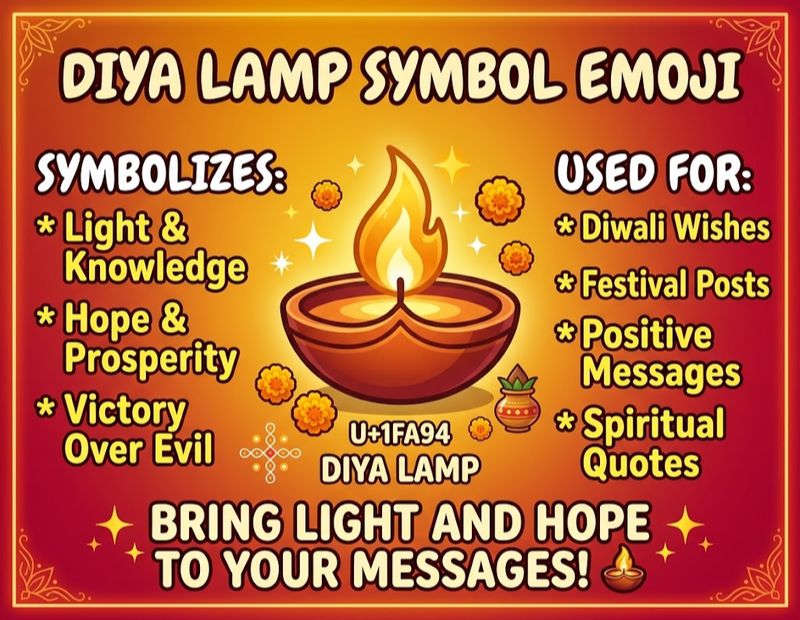
The diya lamp emoji looks like this: 🪔. It was added in Unicode 12.0 in March 2019, and its code point is U+1FA94. Its official name is “diya lamp.”
It is available on iPhone, Android, Windows, WhatsApp, Instagram, X, and most major platforms. The artwork changes slightly between platforms, but the idea stays the same.
Emoji Technical Details
| Detail | Information |
|---|---|
| Emoji | 🪔 |
| Official name | Diya lamp |
| Unicode code point | U+1FA94 |
| Unicode version | 12.0 |
| Year added | 2019 |
| Keywords | Diya, lamp, oil |
| Common use | Diwali, prayer, celebration, hope |
How People Use the Diya Emoji?
- Festival wishes: “Happy Diwali 🪔✨”
- Spiritual posts about peace or inner light
- Home decor and handmade product listings
- Messages of remembrance or positivity
Diya Lamp Symbol Copy And Paste
You can copy the symbol directly from here: 🪔
To paste it, follow these steps:
- Select the emoji above and copy it (Ctrl + C on Windows, Cmd + C on Mac, or long press on mobile).
- Open your chat, post, document, or website editor.
- Paste it (Ctrl + V, Cmd + V, or long press and tap Paste).
Prefer typing it instead? Here are some shortcuts:
- Windows: Press Windows key + period (.) and search “diya.”
- Mac: Press Control + Command + Space and search “diya.”
- iPhone and Android: Open the emoji keyboard and type “diya” or “lamp.”
- HTML code: Use
🟨to display it on a web page.
If the emoji shows as an empty box on an older device, the system is probably missing Unicode 12.0 support. Updating the operating system usually fixes this.
Diya Lamp Symbol In Plan
The phrase “diya lamp symbol in plan” is often searched by architects, interior designers, and drafters. In a floor plan or site plan, the diya symbol is used to mark where a lamp or sacred light will be placed.
Typical placements shown in plans:
- Pooja room or prayer corner
- Main entrance door
- Courtyard or tulsi platform
- Garden pathways during festivals
- Staircase landings during Diwali decor
According to Vastu traditions, the northeast corner of a home is considered best for a lamp. Many designers also mark a diya niche (a small wall recess) in the plan. Use a simple circle with a small flame mark to represent it so the plan stays clean and readable.
Event planners also use the symbol in layout maps for Diwali melas, weddings, and cultural programs to show lighting zones.
Diya Lamp Symbol PNG
A PNG file of the diya symbol is popular because it supports a transparent background. This lets you place the lamp over any photo, card, or banner without a white box around it.
Tips for choosing a good diya PNG:
- Pick a high resolution file (at least 1000 pixels wide) for print use.
- Check that the background is truly transparent.
- Use SVG instead of PNG if you need unlimited scaling for logos.
- Confirm the license. Free for personal use does not always mean free for commercial use.
- Choose a style that matches your project: realistic, flat, line art, or watercolor.
Common PNG uses include Diwali greeting cards, website banners, presentation slides, YouTube thumbnails, packaging labels, and WhatsApp stickers.
Diya Lamp Symbol Craft
Making your own diya is a rewarding activity for kids, schools, and families. It also makes a thoughtful festival gift.
Easy Diya Craft Ideas
- Clay painting: Buy plain terracotta diyas and paint them with acrylic colors, glitter, or small mirrors.
- Air dry clay lamps: Shape a small bowl by hand, let it dry for a day, and decorate it.
- Paper diya cutouts: Fold colored paper into a lamp shape for cards and wall hangings.
- Rangoli with diyas: Place painted diyas in a circular flower pattern.
- Recycled diyas: Use clean coconut shells or bottle caps as small lamp holders.
Materials You Will Need
- Plain clay or air dry clay
- Acrylic paint and brushes
- Fabric glue and beads
- Cotton wicks and oil or ghee
- A bowl of water for shaping clay
Safety tip: Keep decorated diyas away from curtains and children. Painted or glued items should never touch an open flame.
Types of Diya Lamp Symbols
Different materials and styles give the diya a different feel. Here is a quick comparison before we look at each one.
| Type | Material | Best For | Flame Type |
|---|---|---|---|
| Clay diya | Terracotta | Festivals, daily puja | Real |
| Brass diya | Brass metal | Temples, long term use | Real |
| Electric diya | Plastic or metal with bulb | Safe decor | Electric |
| Standing diya | Brass or wood | Large pooja areas | Real |
| LED diya | LED chip | Gifts, balconies | Battery powered |
| Glass diya | Glass | Modern decor | Real or LED |
| Crystal diya | Crystal | Luxury gifting | Real or LED |
| Water diya | Water, floating candle | Bowls, ponds | Real |
Clay Diya Lamp Symbol
The clay diya is the oldest and most traditional version. It is made from natural earth, which links it to the element of earth and to simple living. Because it is cheap, biodegradable, and handmade, it is the favorite for Diwali. Buying clay diyas also supports local potters.
Brass Diya Lamp Symbol
Brass diyas are durable and often passed down through generations. Their golden color represents wealth and purity. Many temples use brass lamps because they last for decades and are easy to clean. A brass diya often carries a sense of heritage and permanence.
Electric Diya Lamp Symbol
An electric diya uses a small bulb in place of oil. It is a good choice for apartments with fire restrictions, offices, and shops. The symbol here shows that tradition can adapt to modern life without losing meaning.
Desi Diya Lamp Symbol
“Desi” diya usually means the classic, handmade, village style lamp. It is rustic, earthy, and filled with warmth. This kind of diya is often paired with mustard oil or ghee. It stands for authenticity, local craft, and roots.
Standing Diya Lamp Symbol
A standing diya, sometimes called a deepstambh or samai in South India, holds several wicks on a tall stand. Multiple flames represent abundance, and the height gives it a ceremonial presence. It is common in temples, weddings, and inauguration events.
Small Diya Lamp Symbol
Small diyas are used in large numbers. Rows of tiny lamps along windows, boundary walls, and staircases create the classic Diwali glow. They symbolize how many small lights can come together to brighten a whole neighborhood.
LED Diya Lamp Symbol
LED diyas are flameless, battery powered, and often reusable. They are safe for children and pets, which makes them popular for gifts and indoor decor. They show how the symbol has moved into the age of sustainable and safe living.
Glass Diya Lamp Symbol
Glass diyas bring a clean, modern look. The transparent body lets the flame shine through and reflect light. They suit contemporary homes and wedding tables.
Crystal Diya Lamp Symbol
Crystal diyas sparkle and scatter light into tiny rainbows. They are chosen for premium gifts and special occasions. The crystal stands for clarity, purity, and refined beauty.
Diya Oil Lamp Symbol
The oil lamp is the diya in its original form. Sesame oil, mustard oil, coconut oil, and ghee are commonly used. Each fuel carries its own meaning in tradition, and ghee is often seen as the most sacred.
Diya Light Lamp Symbol
This term covers any diya used mainly for lighting and ambience. It could be real or electric. In design work, it is shown as a soft glow around a small lamp, giving a feeling of peace.
Diya Water Lamp Symbol
A water diya is made by floating a small lamp or candle in a bowl of water, often with flower petals. It represents the harmony of fire and water, two opposing elements living in balance. It looks stunning for evening gatherings and is also used during river aarti ceremonies.
Indian Diya Lamp Symbol
In the wider Indian context, the diya is a cultural emblem. It appears in classical dance, folk art, temple architecture, and festivals across states. Names change by region (deepam in the South, diyo in Gujarat, pradeep in some areas), but the meaning stays strongly connected to light and devotion.
Diya Lamp Symbol In Hindi
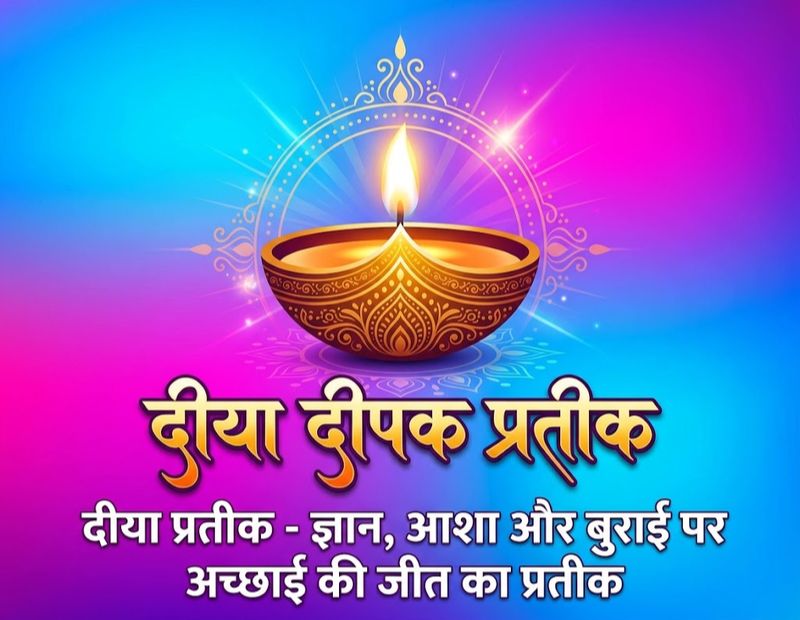
In Hindi, the diya is written as दीया or दीपक. The Sanskrit root is दीप, meaning light.
Here are a few useful Hindi phrases:
| Hindi | Transliteration | Meaning |
|---|---|---|
| दीया जलाना | Diya jalana | To light a lamp |
| दीपावली | Deepavali | Festival of lights |
| ज्योति | Jyoti | Flame or light |
| अंधकार पर प्रकाश की जीत | Andhkar par prakash ki jeet | Victory of light over darkness |
A popular Hindi line says that a single lamp can remove the darkness of a thousand nights. The idea is that one small act of goodness can change a whole situation.
Diwali Diya Lamp Symbol
Diwali is the festival most strongly linked to the diya. Its name comes from “Deepavali,” meaning a row of lamps. Over five days, homes are cleaned, decorated, and lit with diyas.
What the diya represents during Diwali:
- The return of Lord Rama, Sita, and Lakshmana to Ayodhya after exile
- The welcome of Goddess Lakshmi into clean, lit homes
- The victory of dharma (righteousness) over adharma
- Fresh starts, forgiveness, and new financial years in many business communities
Traditional Diwali Diya Placement
- Main door: To welcome Lakshmi and good fortune
- Pooja room: For prayer and gratitude
- Windows and balconies: To spread light outward
- Kitchen and water source: To honor the elements that sustain life
- Tulsi plant: A sacred spot for an evening lamp
Which Direction Should a Diya Face?
Many families follow simple direction rules. These are traditional beliefs, not scientific facts, but they are widely practiced.
| Direction | Traditional Belief |
|---|---|
| East | Peace, wisdom, and new energy |
| North | Wealth, success, and health |
| West | Balanced prosperity |
| South | Usually avoided for regular worship |
Choosing the Right Fuel for a Diya
| Fuel | Traditional Meaning | Notes |
|---|---|---|
| Ghee | Purity, devotion | Burns clean with a gentle glow |
| Sesame oil | Protection, removal of obstacles | Popular in South India |
| Mustard oil | Strength, Diwali tradition | Common in North India |
| Coconut oil | Auspiciousness | Used in temples of the South |
| Camphor wick | Spiritual cleansing | Often used during aarti |
Eco Friendly Ways to Use the Diya Symbol
Modern celebrations are shifting toward mindful choices. You can keep the tradition while caring for the planet.
- Choose handmade clay diyas instead of plastic ones.
- Use natural oils rather than paraffin candles.
- Reuse brass or glass lamps every year.
- Buy from local potters and small artisans.
- Switch to rechargeable LED diyas for long indoor displays.
- Compost old clay diyas or reuse them in the garden.
Design Tips for Using the Diya Lamp Symbol
If you are a designer, blogger, or small business owner, here is how to use the symbol well.
- Keep it simple. A clean shape reads better on small screens.
- Use warm colors. Gold, saffron, and deep red feel natural for this symbol.
- Leave white space. Let the flame breathe.
- Respect the culture. Avoid placing the symbol on items that disrespect its sacred role, such as shoes or disposable trash items.
- Match the tone. A realistic diya fits spiritual content, while a flat icon suits modern branding.
- Check cultural context. Diya meanings can differ slightly between communities, so research your audience.
Conclusion
The diya lamp symbol is a small shape with a huge message. It tells us that light can defeat darkness, that hope can survive hard times, and that a single flame can inspire many more. From a clay diya in a village home to a 🪔 emoji on a phone screen, the meaning stays the same: keep your inner light alive and share it.
Whether you are lighting one for Diwali, using it in a design plan, creating a PNG poster, or simply copying the emoji into a message, you are taking part in a tradition that is thousands of years old. Use the symbol with respect, creativity, and a bit of warmth, and it will always carry its message well.
Frequently Asked Questions (FAQs)
What does a diya lamp symbolize?
A diya lamp symbolizes light, knowledge, hope, and the victory of good over evil. It also represents purity, prosperity, and the inner light of the soul.
What is the diya lamp emoji code?
The diya lamp emoji is 🪔 with Unicode code point U+1FA94. It was introduced in Unicode 12.0 in 2019.
How do I copy and paste the diya lamp symbol?
Select the 🪔 emoji, copy it, and paste it anywhere you type. You can also find it by searching “diya” on your emoji keyboard.
Why is the diya important in Diwali?
Diwali means a row of lamps, and diyas celebrate Lord Rama’s return and the triumph of light over darkness. They also welcome Goddess Lakshmi into the home.
What does the wick of a diya represent?
The wick represents the human soul. Without it, the lamp cannot carry light.
What does the oil or ghee in a diya mean?
The oil or ghee is seen as the ego, desires, or negative traits that burn away to produce light. Ghee is also considered especially pure.
Which diya is best for home use?
Clay diyas are best for tradition and festivals, while brass diyas suit daily puja and long term use. LED diyas work best for safety and reusable decor.
Which direction should a diya face?
East is linked with peace and wisdom, and north with wealth and health. These are traditional beliefs followed in many homes.
How do you write diya in Hindi?
Diya is written as दीया or दीपक in Hindi. The Sanskrit root word is दीप.
Is a diya only used in Hindu traditions?
It is most closely tied to Hindu culture, but similar lamps are also used in Jain, Sikh, and Buddhist settings. Many people also use diyas simply as a symbol of peace and hope.
Can I use a diya PNG for commercial work?
Only if the license allows it. Always check the usage terms before using a PNG on products, ads, or branding.
What is the difference between a diya and a candle?
A diya is an oil lamp rooted in religious and cultural tradition, while a candle is wax based and mostly decorative. The diya carries ritual meaning that a candle usually does not.
